
Last updated on March 31st, 2025
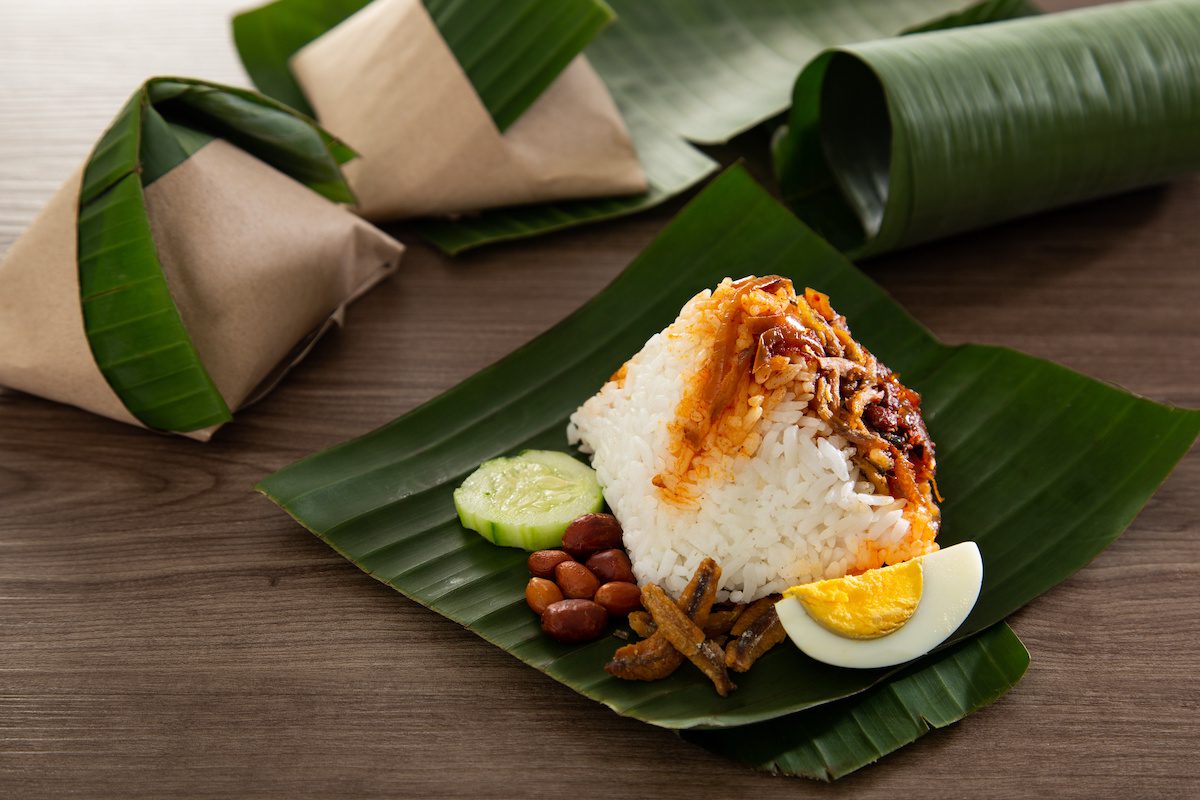
Featured image: Nasi lemak, a popular staple of Malaysia’s breakfast culture | Photo by Tourism Malaysia
Malaysia’s Breakfast Culture may be included in UNESCO’s “Intangible Cultural Heritage of Humanity” soon
by Claudia Laroye
To the delight of the crowd, the man dressed in a brightly patterned silk shirt is taking the art of pulling iconic teh tarik, Malaysian pull tea, to new heights.
The fact that it’s none other than Mr. Mohd Afandi bin Abu Bakar, Consul General of Malaysia in Vancouver, who’s masterfully pouring the hot combination of strong black tea and sweet condensed milk from one container to the other, is an impressive surprise.
According to the Consul General, the Malaysian breakfast practice holds profound significance in the country’s culinary heritage, one that is deeply ingrained in the fabric of its overall culture. Malaysian population consists of people of different races, religions and race, including the Malays, Chinese, Indians and non-Malay Bumiputra. (Source: Malaysia Government)
“Malaysian Breakfast Culture is such a unique experience,” Mr. Afandi notes. The ingredients, dishes and flavours are woven into the country’s rich cultural history even before its formal founding in 1963. The Breakfast Cultural practice serves to unite the diverse ethnic and religious population in Malaysia in a common love of universally shared dishes.
“It represents a traditional custom of embracing multiculturalism, where individuals from diverse backgrounds gather to savor and share delightful morning delicacies in both public and private settings,” Mr. Afandi says.
What is Malaysian Breakfast Culture?
Malaysian Breakfast Culture revolves around specific dishes and one signature beverage, specifically nasi lemak, roti canai and teh tarik.
Nasi lemak is the mainstay. A portion of fragrant, fluffy rice is cooked in rich coconut milk. It is garnished with tiny crispy anchovies, spicy sambal, hard-boiled eggs, roasted peanuts, slices of cucumber and then wrapped snugly in a banana leaf. It’s a savoury, delicious bundle of textures and flavour sensations – a full meal in itself.
Roti canai comprises the purely starch portion of the meal. Roti means bread, and in this case, it’s a fluffy flatbread that is first rolled, then fried and torn apart to be dipped into rich chicken curry or lentil dal.
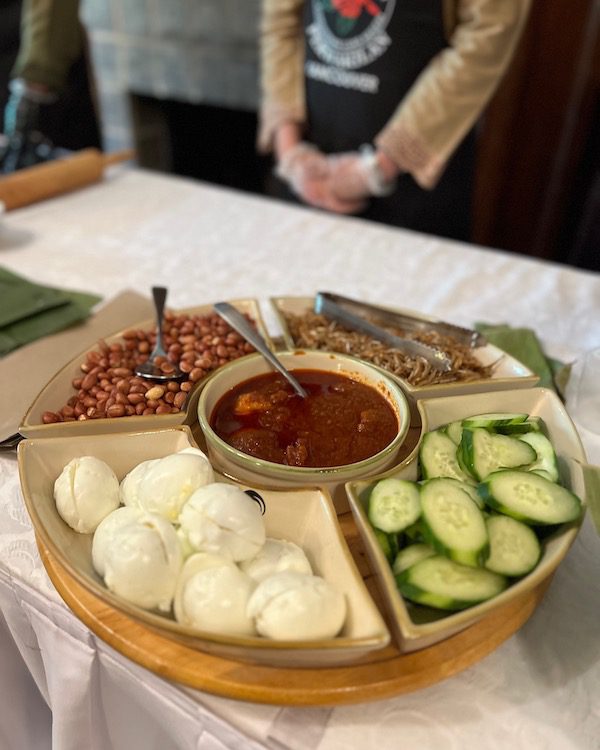
Ingredients to make nasi lemak, a main stay of Malaysia’s breakfast culture / Photo by Claudia Laroye
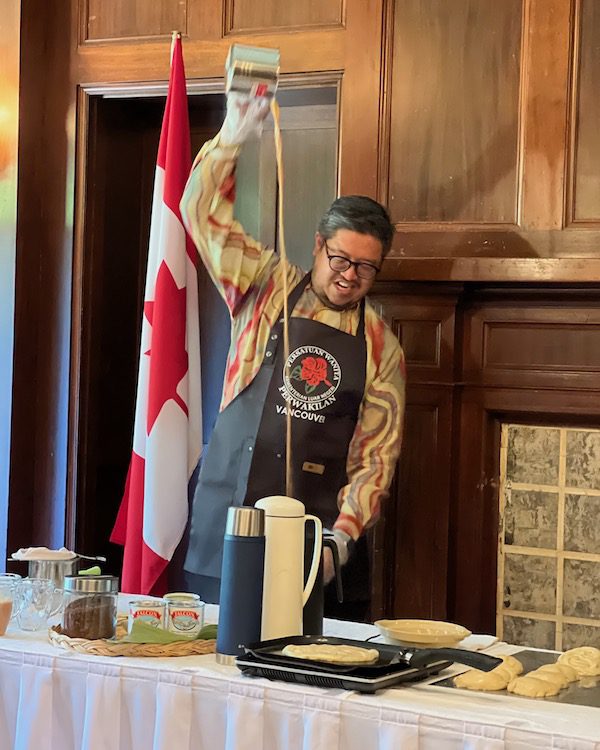
Consul General of Malaysia prepares pulled tea / Photo by Claudia Laroye
All of this must be accompanied by steaming cups of teh tarik. Known as ‘pulled tea,’ the name is derived from the process of pouring the tea (often from a height) from one container to another, back and forth, stretching or pulling the arms in the process. The pull serves to cool the tea and foam the condensed milk into a frothy crown before serving.
Teh tarik is Malaysia’s beloved national drink, and it is as delicious to drink as it is entertaining to watch being made. Particularly in the hands of a diplomatic tea master such as Mr. Mohd Afandi.

Malaysia’s Breakfast Culture and UNESCO’s Intangible Cultural Heritage of Humanity
One can never underestimate the power of diplomacy through food. And as I’m learning, they take food very seriously in Malaysia, particularly when it comes to Malaysia’s Breakfast Culture.
The Malaysian Breakfast Culture plays a pivotal role in fostering unity and racial harmony within Malaysia’s multi-ethnic societies. It represents a living heritage deeply intertwined with traditional dietary practices, featuring staple foods beloved by all Malaysians.
In 2023, the Malaysian government submitted a nomination for the “Malaysian Breakfast Culture: Dining Experience in a Multi-Ethnic Society” to be inscribed on the UNESCO Representative List of the Intangible Cultural Heritage of Humanity.
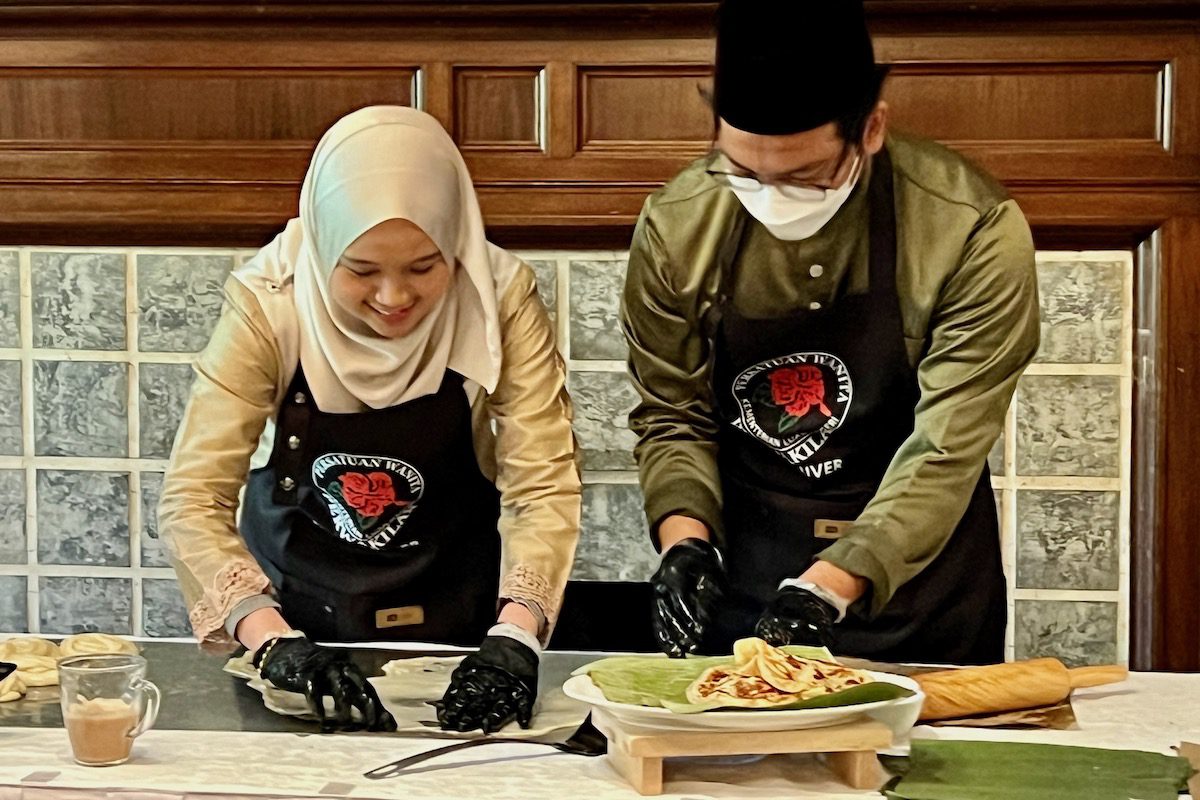
Student chefs preparnig traditional breakfast foods / Photo by Claudia Laroye
According to UNESCO, an intangible cultural heritage is a practice, representation, expression, knowledge, or skill considered part of a place’s cultural heritage. The annual nominations are to identify cultural heritages worldwide that may need urgent safeguarding or to raise awareness of their importance.
Seeking UNESCO recognition for a humble breaking of the fast may strike those unfamiliar with Malaysian cuisine as an intriguing quest. Particularly those of us in North America whose breakfast traditions run the gamut from warm porridge to cold bowls of Frosted Flakes or PopTarts hastily eaten on the run.
It is expected that UNESCO will render its decision later this year. Fans of Malaysian Breakfast Culture raise their steaming cups of teh tarik in hopeful anticipation.
- To learn more about Malaysia’s breakfast culture
- 20 Malaysian breakfasts to try
- Read the full UNESCO submission here
- Canada One Travel: Contact: Mr. Andy Ling, Email: [email protected]. Learn more here.
Disclaimer: We’re always proud to showcase countries from around the world that are welcoming to women over 50 and female solo travellers. Since we haven’t experienced this country, we want to let you know that the material for this article was provided by Tourism Malaysia, as part of a sponsored campaign with JourneyWoman.

Read More From Malaysia
20+ Things for Women to Know About Malaysia: Travel Tips for Your First Trip
Travel tips for women to Malaysia, a dazzlingly diverse country, including Penang, Kuala Lumpur, Malacca, Langkawi and the Cameron Highlands.

Stepping into the Clouds in Langkawi Island, Malaysia: What’s Not to Love About the Andaman Sea, White Sand Beaches and UNESCO Geoparks
If stepping into the clouds is an adventure you enjoy, Langkawi, an archipelago of islands in Malaysia, may be just the place for you.

Finding Sanctuary on Malaysia’s Pangkor Laut Island: The Perfect Wellness Escape
Malaysia’s wellness traditions are deeply connected to nature, ancestry and the land itself, as Carolyn Ray discovers at Pangkor Laut Resort.

0 Comments