
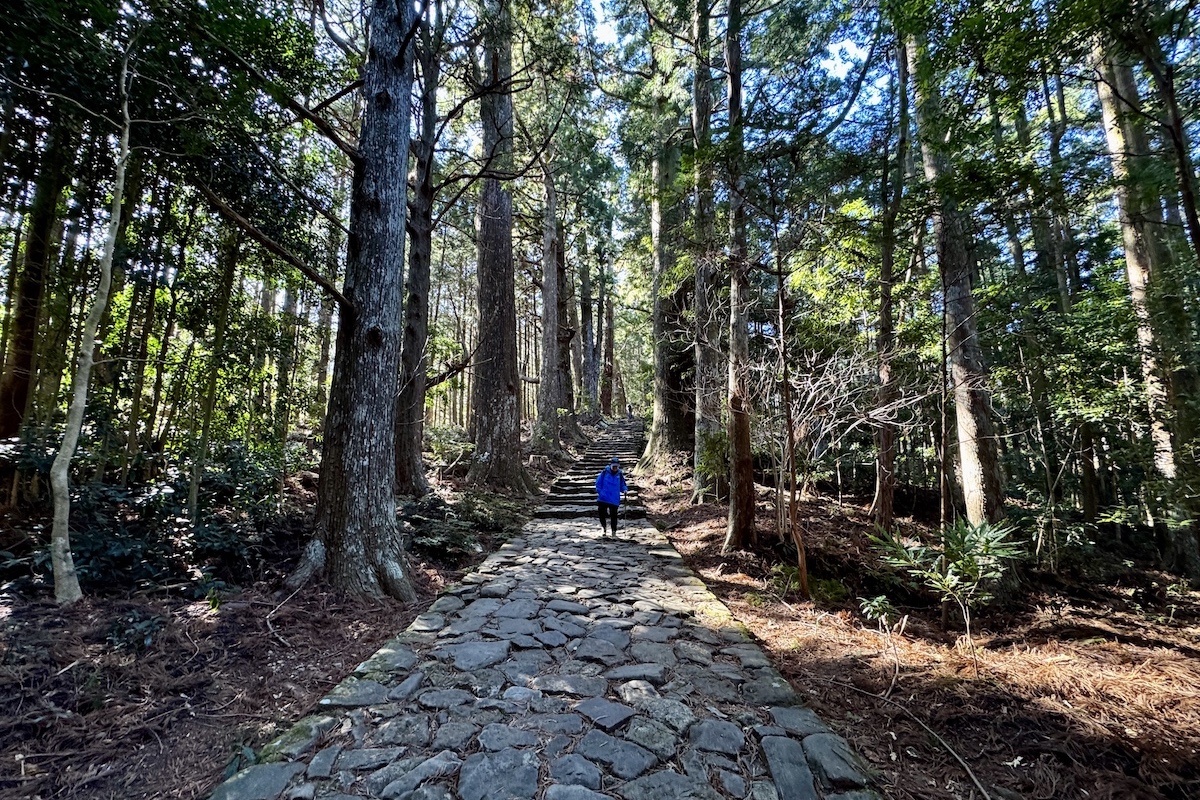
On a self-guided pilgrimage through Japan’s forests, there are equal doses of nature, culture and food
by Jennifer Bain
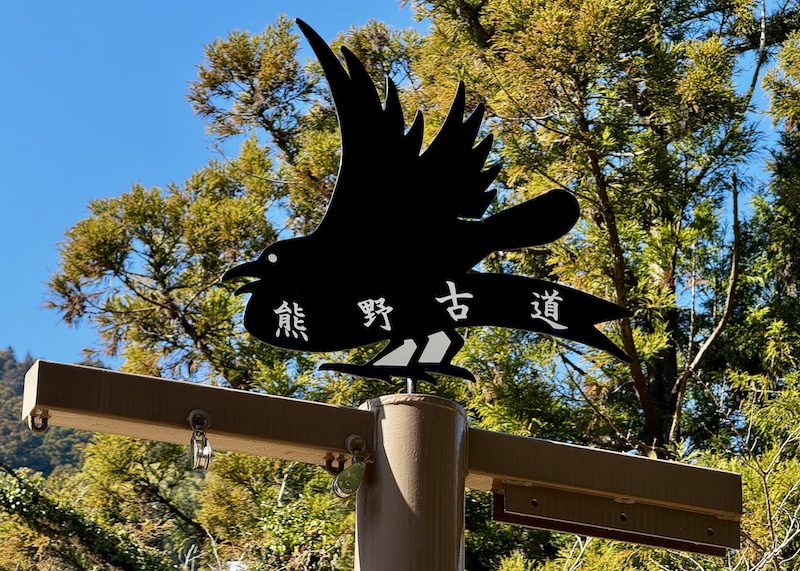
A distinctive cawing echoed through the forest along the Kumano Kodō pilgrimage route. Perhaps it was Yatagarasu, the three-legged crow who guided Japan’s first emperor through the Kii Mountains in the Japanese creation myth and who now serves as a divine messenger and supernatural guide. Swinging from my daypack was an omamari amulet featuring Yatagarasu to ward off evil and keep me safe.
Signs warned of the possibility (albeit remote) of black bears, but all I saw was raccoon dog scat. It was winter and too cold to worry about venomous mamushi snakes, giant hornets and land leeches, but the girl who played with garter snakes at her cottage as a kid was thrilled to spot an almost navy earthworm that was as thick as her fingers and longer than her hand.
Pilgrimage etiquette dictates that we protect the local flora and fauna, so I moved the oddly firm and strangely charismatic creature off the well-worn path.
Get stories just like this one delivered straight to your inbox. Join the newsletter here.
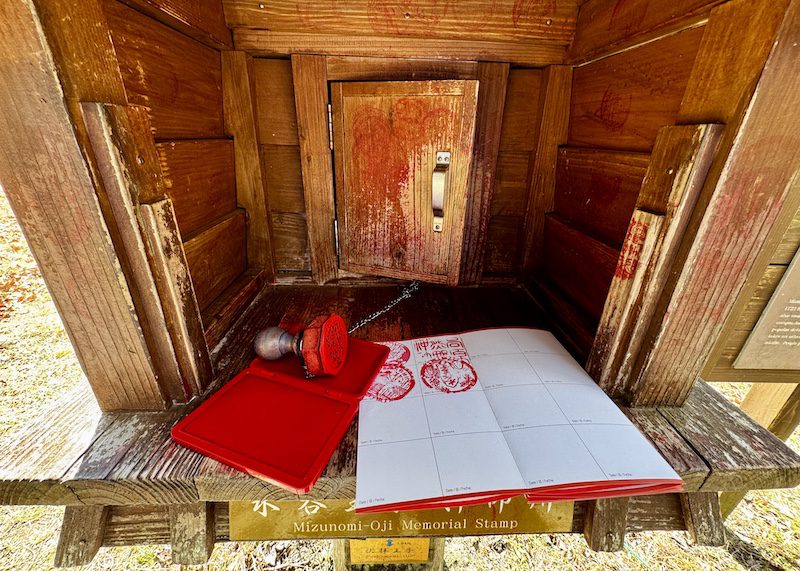
While not yet as globally adored as Spain’s Camino de Santiago, the Kumano Kodō is a network of pilgrimage trails that weaves through the mountains of the Kii Peninsula south of Kyoto and Osaka to the Kumano Sanzan (three Grand Shrines of Kumano). Like the Camino, it’s a UNESCO World Heritage Site. You collect stamps and can even earn Dual Pilgrim status.
Japan’s Nakahechi Route
I had flown to Japan from Canada in late January to walk the Nakahechi route through forested mountains and villages to the Grand Shrine of Hongū before finishing at Nachi Grand Shrine. With my friend and fellow travel writer Pat Lee for company, and with the route and logistics mapped out by Oku Japan, I was well-prepared for a five-day rural journey that would involve 20,000-odd steps a day and help from 10 local buses, two semi-express trains, two taxis and a luggage transfer service.
“We hope you are safety and success of travel,” Chie Yokoya said sweetly one morning.
Her halting English was infinitely better than my abysmal Japanese as she performed a kiribi ceremony, striking a stone with steel to create a spark to bless my journey.
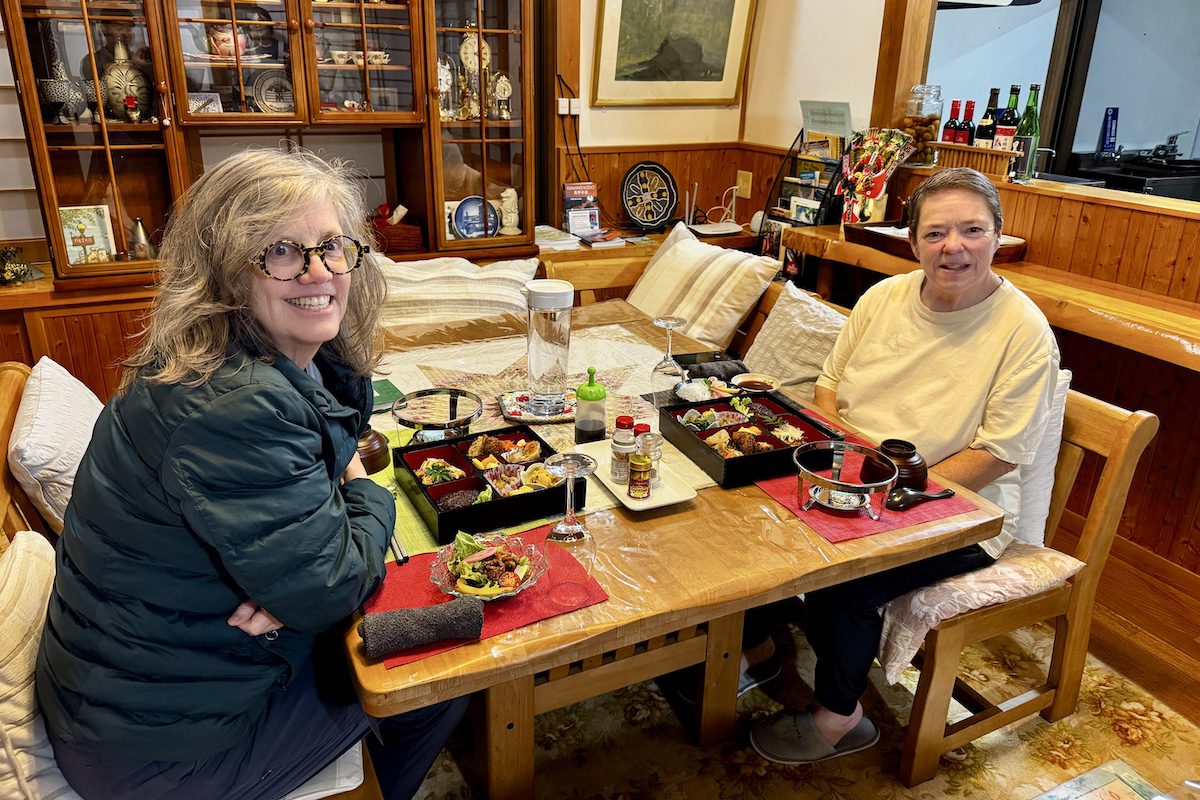
We had spent the night at Sakura-no-Sono (Cherry Garden), the “minshuku” Chie runs with her husband Chin in Chikatsuyu. We slept soundly on futons set on tatami mats in a two-bedroom guesthouse, sharing a bathroom and doing laundry, and enjoying breakfast and dinner feasts before leaving with bento boxes filled with onigiri (rice balls), soft-boiled eggs and local vegetables.
It was in Chikatsuyu that we met Kouki Hasegawa and Mayumi Bamyo at Oku Japan’s branch office, drinking brown rice tea and choosing omamari amulets.
“This three-legged crow symbolizes the region,” said Bamyo.
“It wards off evil spirits,” Hasegawa added.
The Kumano Kodõ is a sacred site and pilgrimage destination
Oku Japan helps people to “travel off-the-beaten-track” with guided and self-guided trips. It created a day-by-day itinerary for our self-guided Winter Kumano Kodō tour. Paired with the photo-filled walking guidebook, three maps and a handbook full of local customs, we had everything we needed to strike out safely on our own from Kii-Tanabe.
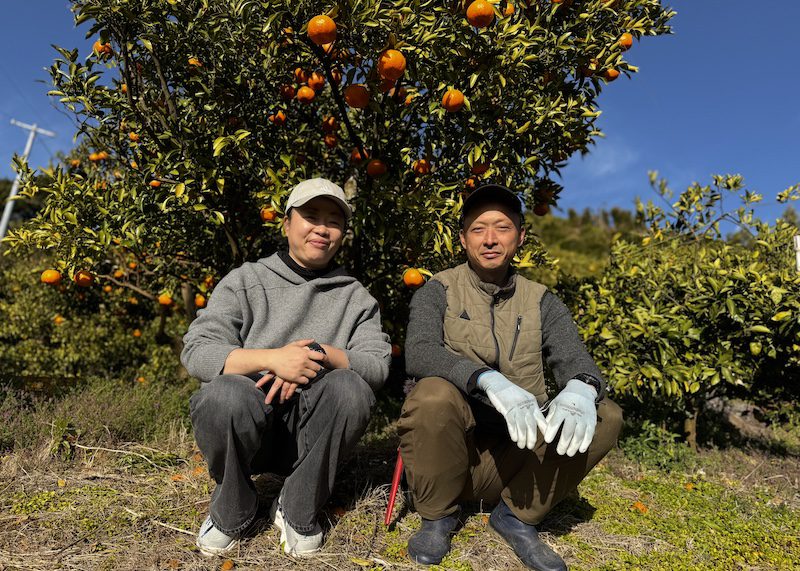
To kick things off, we hopped in the back of a truck to visit Reiko Yamamoto’s family orange farm in Kamiakizu. She treated us to several varieties of citrus, including sumos (dekopan) and mandarins that transported me back to the 1970s when Japanese mandarins wrapped in pale green tissue were always in my Christmas stocking.
The Kumano Kodõ, I learned from this literature, has been a sacred site associated with nature worship since prehistoric times. People believe Izanami — the mythological goddess who gave birth to the Japanese archipelago with her husband Izanagi — was buried here.
After Buddhism was introduced to Japan, a new religion emerged, called Shugendō, which is based on a form of mountain worship, and this area became a site of ascetic training.
Stay connected here with a Saily eSIM. Use code JOURNEYWOMAN for 5% off.
“Shugendō can be translated as `path of training to achieve spiritual powers’ and emphasis is put on physical endurance as the path to enlightenment,” Oku Japan explains. “Kumano’s rugged and isolated mountains were an ideal place for the demanding pilgrimages and training.”
The three Grand Shrines of Kumano — Kumano Hongū Grand Shrine, Kumano Hayatama Grand Shrine, and Kumano Nachi Grand Shrine — became pilgrimage destinations for the imperial family, aristocrats, commoners and, eventually, foreign tourists like me.
Five main pilgrimage routes lead to the shrines but until fairly recently, women weren’t allowed to enter many sacred mountains and sites. “However, since ancient times Kumano has welcomed all, regardless of social class, gender or health,” Oku Japan notes. “Its consequent popularity as a place of pilgrimage led to the busy trails being referred to as ‘procession of ants.’”
To feel like ants, we’ll have to return because one of the joys of winter walking is that fellow pilgrims are few and far between. Some of the ones we did meet carried bear bells and walking sticks that clickety-clacked on the stone parts of the path.
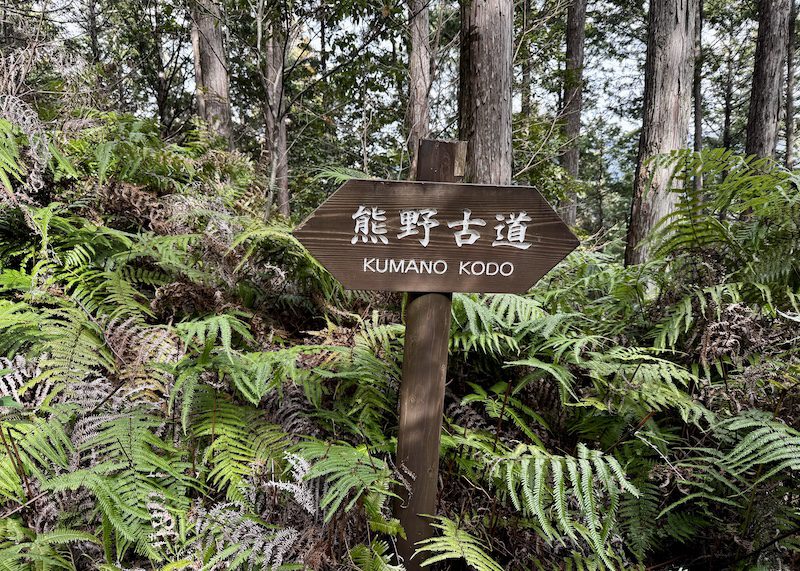
Kumano Kodo sign marker along the path / Photo by Jennifer Bain
Pilgrimage purification
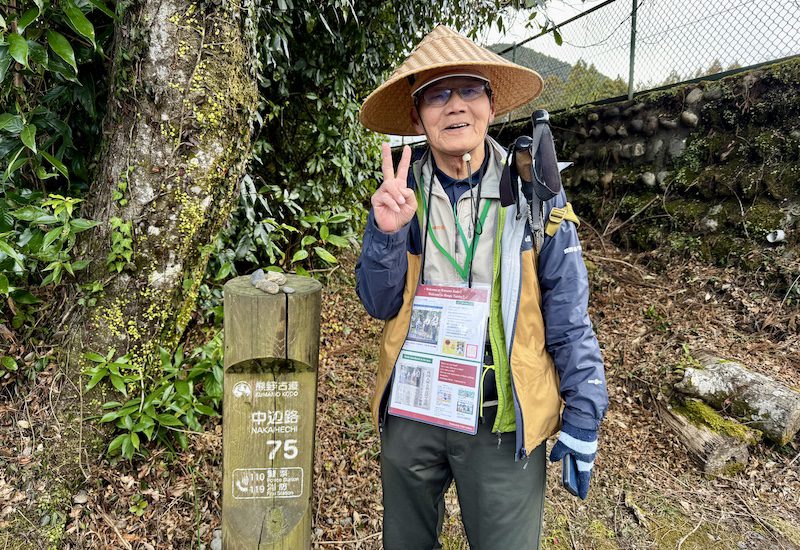
In Chikatsuyu, the day we got our amulets, we scoured a grocery store for dorayaki (red bean pancakes) and other trail snacks and were walking to the guesthouse when an exuberant man wearing a traditional conical minachi-gasa hat, locally woven from strips of a Japanese cypress tree.
Pilgrimage etiquette dictates that you greet others with a smile and warm heart, and that’s exactly what Akira Nakagishi did as he asked us to share our impressions of the pilgrimage for Instagram and TikTok videos.
“Hello. Welcome to Chikatsuyu. My name’s Akira. I was born in Hongū, and grew up there and lived there all through my life, and now I’m 84 years,” he told us while filming himself. “I went to FM Tanabe’s broadcast to recording this morning and came back here with my daughter’s driving and I saw you and stopped and asked the videotape recording. Thank you very much, wonderful ladies from Canada. I enjoyed chatting and recording.”
Nakagishi became an Instagram creator in his 80s after a stroke limited his ability to walk and work as a guide. A former high school English teacher, he now loves practising conversational English. “This is my duty, my hobby, to get interviews and post for two-and-a-half years,” he confided.
The next day, Nakagishi waited for us by the number 75 signpost outside the Hongū Grand Shrine for another round of interviews. I didn’t catch everything he said, but know he mentioned “taking off the dirt” and “purifying our minds.”
Would it be weird to admit that my favourite part of each day — when temperatures hovered around 0C — was the joy of sitting on heated Japanese toilet seats?
In Kawayu Onsen, where we stayed at the Fujiya (a lovely ryokan with more tatami mat rooms), I cleansed myself in the town’s hot springs.
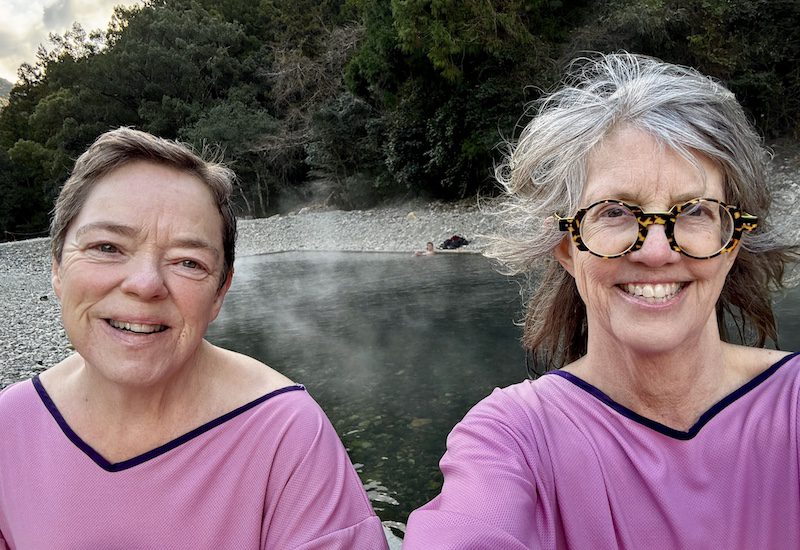
Onsens are usually segregated by gender and nudity is mandatory. But for two months every winter, a gravelly stretch of river becomes a temporary onsen that’s open to everyone wearing “suitable swimwear.” We rented “bathing suits” (long-sleeved, knee-length coverups) from our ryokan and purified our minds in the steamy waters of the Sennin-buro outdoor bath.
Everywhere we went, we heard, but didn’t see crows. Yatagarasu, that mythical three-legged crow, brings people luck in reaching their destination and realizing their dreams.
My dream for this trip was simply to push myself physically and to feel like I was living in my body and not just in my mind. Wearing layers — two on the bottom and five on top — was a small price to pay to avoid the crowds and heat of summer or the spring rains that can make walks treacherous.
Finishing the Kumana Kodō trail
My final Kumano Kodō moments came at the Nachi Grand Shrine, where we found oranges and fresh mandarin juice for sale, as well as the right place to stand to capture the three-storey pagoda and distant waterfall in the same photograph. Then we climbed down Daimon-zaka slope, a cobblestone staircase lined by ancient cedars that some say is the most beautiful section of the pilgrimage trail.
There’s a special feeling when you stumble out of the woods, grotty but proud of what you’ve accomplished, and slowly return to the land of creature comforts.
A final bus whisked us to Kii-Katsuura, an important tuna fishing port, for raw tuna rice bowls and soba noodle soup for lunch and baked sweet potatoes from the FamilyMart convenience store for dessert. A final hotel with Japanese-style tatami rooms, Manseiro, had sea views and hot showers, and even let us check in a few minutes early (something Japanese hotels are reluctant to do).
Grateful to my feet for propelling me on this micro-adventure, I found the free public footbath along the waterfront and gave them a good soak in the hot springs water while gazing down at tuna mosaics. There were Yatagarasu-themed souvenirs all over town, and I swear I heard one final round of cawing in the distance before calling it a day.
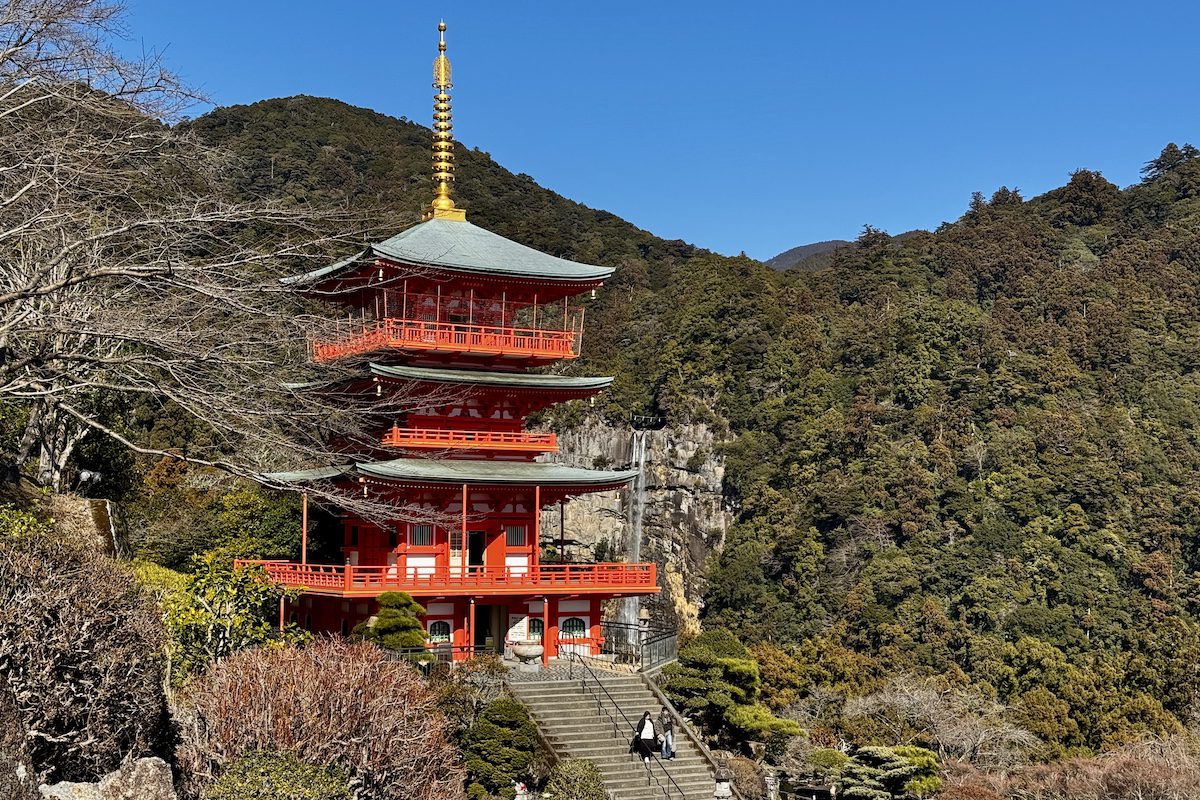
Seiganto-ji Temple and Nachi-no-Taki falls / Photo by Jennifer Bain
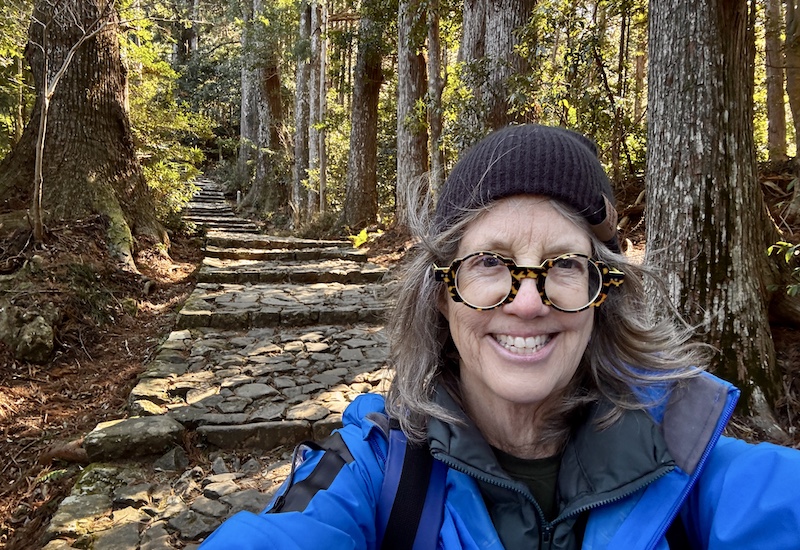
Jennifer Bain on the Daimon-zaka slope / Photo by Jennifer Bain
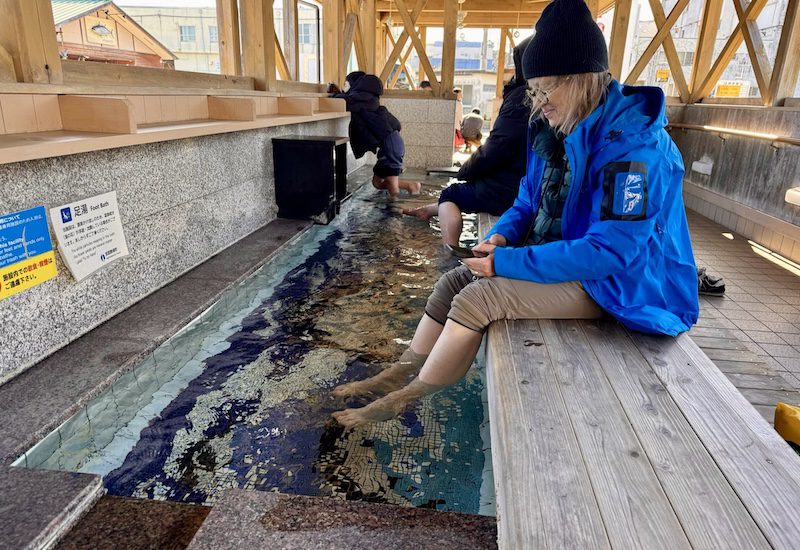
Writer Jennifer Bain at the Uminoyu public footbath in Kii-Katsuura / Photo by Pat Lee
An urban ending in Osaka
“Osaka is the kitchen of Japan, so we do a lot of soul food tours,” Arigato Travel/Arigato Japan Food Tours guide Ronan Maynard Cancio tells me. People come to eat takoyaki, okonomiyaki, yakisoba, kushikatsu and doteyaki, but I asked Arigato to design a custom tour of Japan’s beloved convenience stores (konbini), like the ones I visited along the Kumano Kodō.
On our last morning in Japan, we visited seven konbini on the local side of the touristy Namba district— one Japanese-owned 7-Eleven, one FamilyMart and two Lawsons, plus three independents.
“Right now it’s like a big thing — a lot of people are very curious about convenience stores,” Cancio said. “A lot of people, especially tourists, they’re lost about what to get here. So they only know what they see on TikTok, on reels and the internet. They get the chicken, they get the egg sandwich, they get the rice balls (onigiri). But today, of course you can get it, too, but I will show you some local favourites as well.”
For three-and-a-half hours, we feasted on everything from Hokkaido milk cream cake rolls and blend-it-yourself strawberry smoothies to natto hand rolls and crème brûlée ice cream.
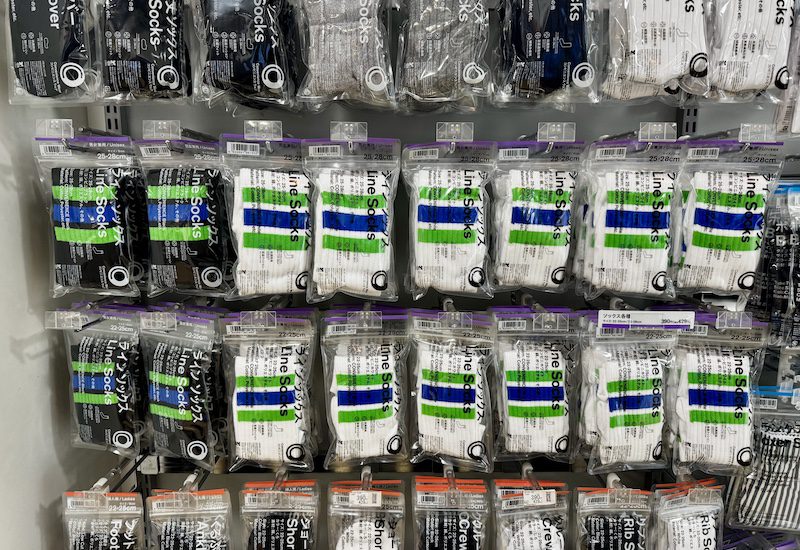
I had already snapped up FamilyMart’s iconic green and blue striped “convenience wear” socks created by Japanese fashion designer Hiromichi Ochiai, and Lawson’s rival pink and blue version made by Muji. These socks have ben dubbed Japan’s coolest souvenir and will forever remind me of walking the Kumano Kodō.
Read More: Solo Travel Tips for Japan for Women 50+
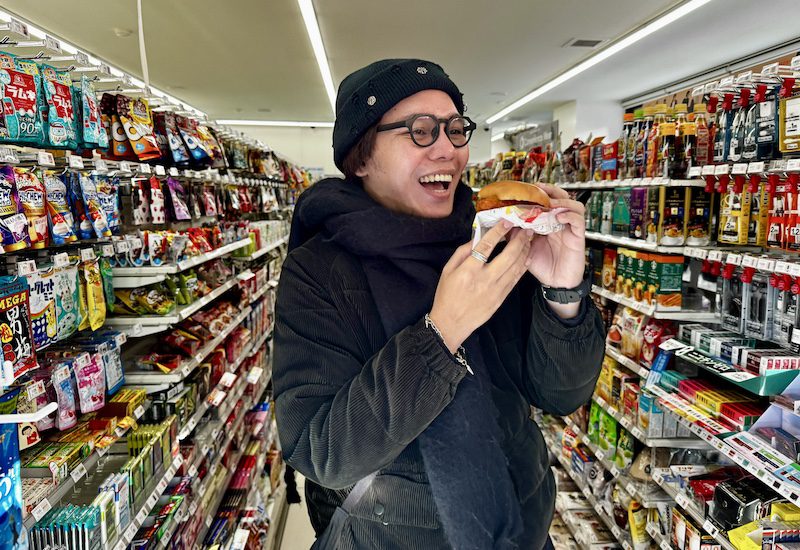
Arigato Travel tour guide Ronan Maynard Cancio during a convenience store tour in Osaka / Photo by Jennifer Bain
How to get to Japan’s Kumano Kodō region
How to get there
Many airlines fly non-stop to Tokyo from major hubs around the world. I flew Air Canada from Toronto to Tokyo’s Haneda Airport. From Tokyo, I took the bullet train (Shinkansen) to Osaka with a reserved seat — a quick 2.5-hour journey across 500 kilometres. On the way home, I flew from Osaka Itami Airport on Air Nippon Airways (a Star Alliance partner) and then from Tokyo to Toronto on Air Canada. Check for flights here.
Customs/Immigration
Register your stay in advance with Visit Japan Web to get the QR code you’ll need when arriving and passing through customs and immigration at the airport. There is no cost to register.
How to get around
Oku Japan provided step-by-step instructions (with photos) on how to get around using limited express trains, local buses and pre-arranged taxis. You must pay in cash for buses, although they can make change for ¥1,000 notes.
Where to stay
I love the convenient Royal Park Hotel Tokyo Haneda in Terminal 3 of Tokyo Haneda Airport (before security). In Osaka, we chose a hotel that Oku Japan recommended — Hotel Vischio Osaka — because it was a quick walk from Osaka Station (Umeda), not to be confused with Shin-Osaka Station, where the bullet train arrives. I always pay a little extra for a rate that includes the buffet breakfast. Find the perfect place to stay here.
Money
Oku Japan recommended ¥3,000 to ¥5,000 a day in cash when travelling in rural Japan where sometimes cash is the only payment option. I didn’t spend it all. In Tokyo, I added a rechargeable, contactless Suica card to my Apple Wallet to use for trains (subways), buses and shopping at places like convenience stores across the country. You can download the app if you prefer or buy a physical card (in cash) at Haneda Airport. (Get the Wise app here to simplify currency conversion.
Gear tips
I travelled carry-on only with a waterproof dry bag tucked into my roller bag. I hiked in Blundstones but most people will use proper hiking shoes/boots depending on the season. I took an insulated water bottle and filled it with Japanese tea each morning. Layers are essential for winter hikes. I swear by Uniqlo’s HEATTECH collection (leggings and long-sleeve shirts) — the Japanese brand has shops in Canada. While I didn’t need a raincoat in winter, I took a lightweight and packable one and then bought a cute Japanese hooded poncho that would have covered me and my backpack if needed.
Disclaimer: Jennifer Bain was partially hosted by Oku Japan and Arigato Travel and was not compensated for her time spent researching, travelling and writing this feature, nor was JourneyWoman for publishing it. In addition, the host organizations did not review this article before it was published, a practice that allows the writer to express her perspective with integrity and candour. Jennifer paid for her airfare and hotels in Tokyo and Osaka.


Jennifer Bain

Jennifer Bain is an award-winning journalist who travels the world in search of quirk. She’s the Canada editor of U.S.-based National Parks Traveler and spent 18 years at the Toronto Star as food editor and then travel editor before semi-retiring in 2018 to freelance for a variety of outlets. Jennifer has written two cookbooks and three travel books. She lives in Toronto and summers on Fogo Island in Newfoundland and Labrador (which cheekily calls itself one of four corners of the flat earth).
0 Comments