
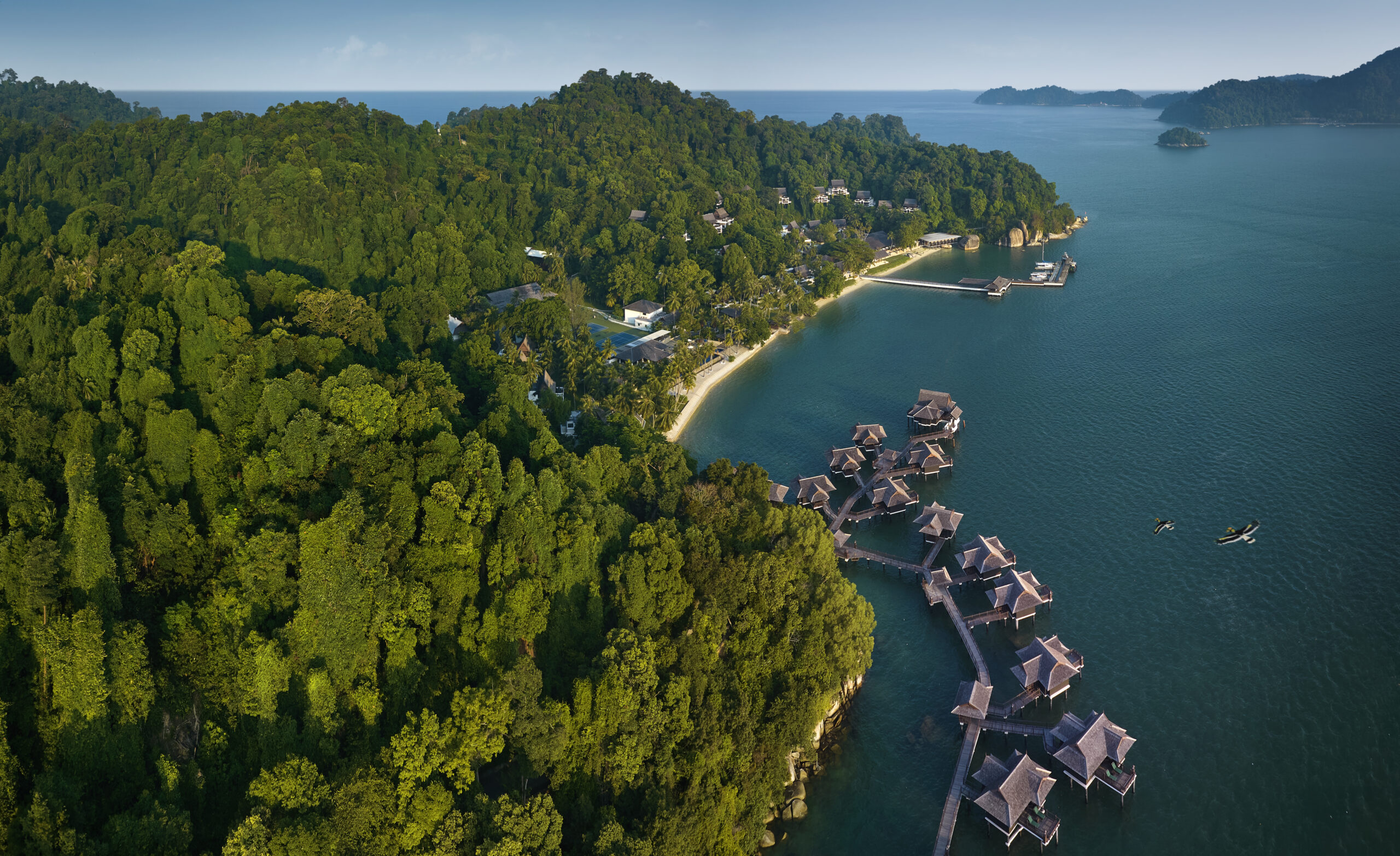
Featured image: At the Pangkor Laut Resort, women can connect to Malaysia wellness to rest and recharge | Photo provided by Pangkor Laut Resort
A hidden gem near Kuala Lumpur, with a luxury Spa Village
by Carolyn Ray
When I arrive for my first spa treatment at the island resort of Pangkor Laut, I’m a little anxious. I’m not really a ‘spa’ person, so the mere mention of water therapies, herbal steamers and pampering makes me a little uncomfortable. However, after trekking across Vietnam, Cambodia and Malaysia for the past month, I can’t resist the offer of a 100-minute Malay massage, described in the spa literature with phrases like ‘long kneading strokes’ and ‘oil made with local ingredients such as turmeric, cinnamon, garlic, onion and citronella.’ Yes, please!
I arrive at the Spa Village clad in a damp bathing suit from a swim in the adjacent infinity pool, and am warmly welcomed and offered a cool cup of lemongrass water. After completing the requisite paperwork confirming that I have no serious aches, pains or allergies, I follow the petite Malaysian attendant to a hut with four chairs and a bowl filled with orchid petals. She invites me to put my feet in the warm, scented water and massages them gently, pushing on pressure points that send shivers up my spine. Then, she taps the bottom of my feet lightly with a mallet, which she says is a Chinese technique to improve my circulation. So far, so good, I think.
Get stories just like this one delivered straight to your inbox. Join our mailing list here.
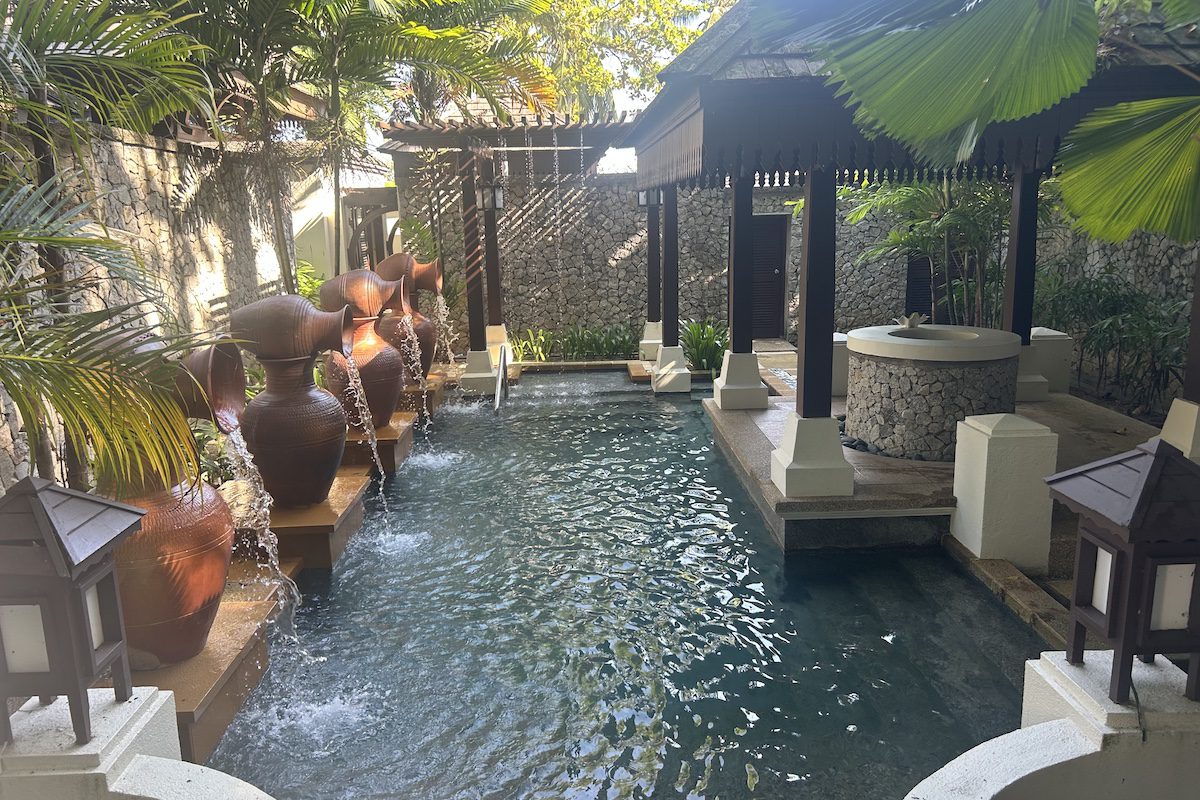
The outdoor pool in the Bath House, with a waterfall-style shower / Photo by Carolyn Ray
I assume we’re going into the massage room, but first, I’m led to the Female Bath House, where I don a traditional Malay batik sarong. Outside, I spend the next 30 minutes alone in the water, starting with a cool pool of back-pounding waterfalls and ending in a warm, steaming Japanese bath. Along the way, I breathe deeply into steam boxes of herbs wrapped in pandan leaves, designed to calm, detoxify, uplift and de-stress. Then, in a hammam-like ritual inside a small hut, I exfoliate my skin with an abrasive goshi-goshi cloth and duneberry soap. My Bath House ritual ends with a Shanghai scrub, where I lie on a marble bed and am doused with warm water. It’s absolute heaven.
“As the most universal element of healing across cultures, water begins every journey at Spa Village Pangkor Laut,” says Chik Lai Ping, Senior Vice President, Spa Division, YTL Hotels, which owns the resort. A Malaysian, family-owned luxury brand, YTL Hotels operates 35 healing spas, known as Spa Villages, across Malaysia in hotels and resorts. “The Bath House draws inspiration from bathing cultures across Asia. The result is not a prescribed path, but a cultural hydro-journey where water is the first part of healing, quietly and without instruction.”
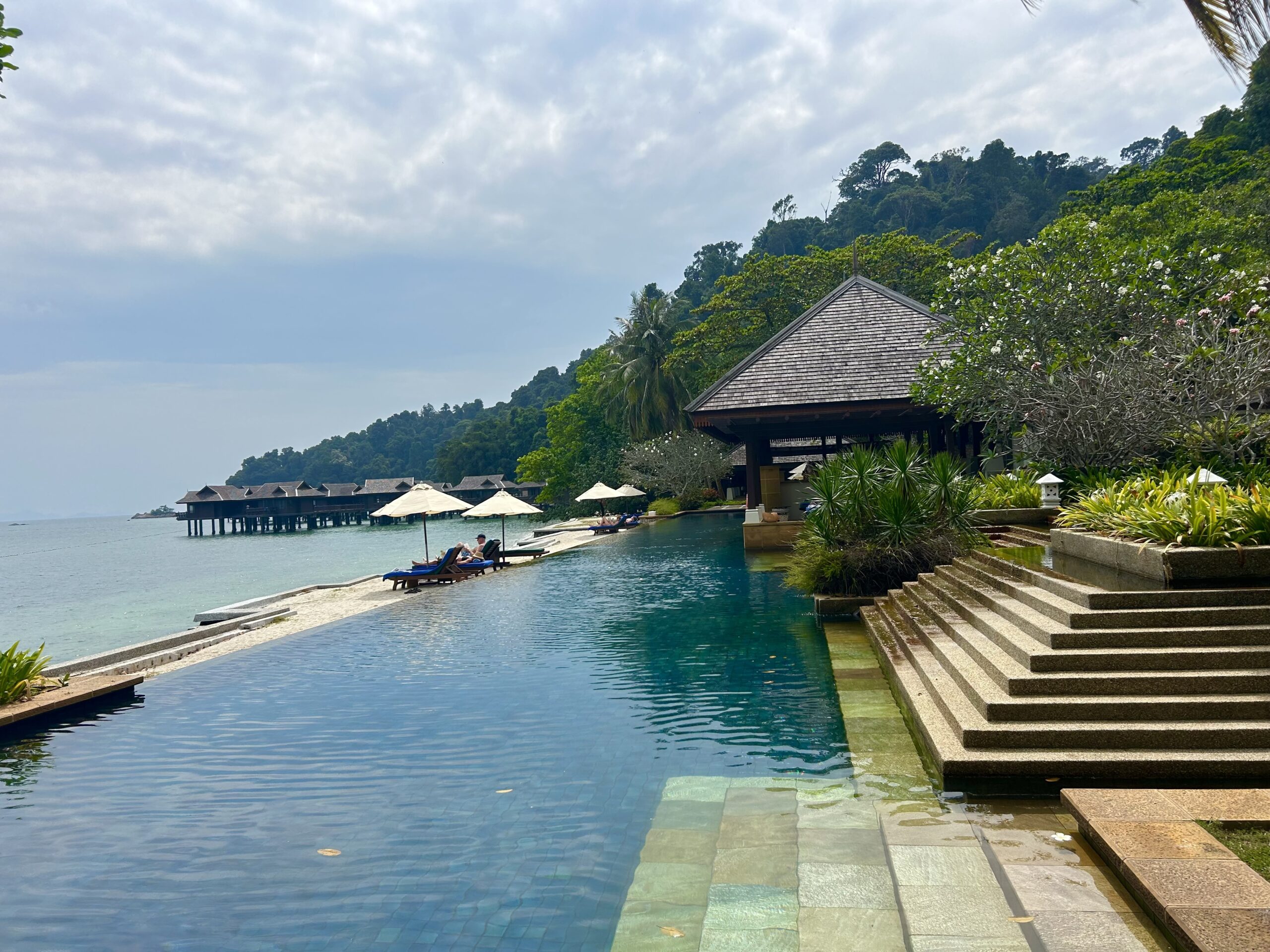
The Spa Village area features an adults-only private pool area and restaurant, with overwater bungalows / Photo by Carolyn Ray
Malaysia’s healing traditions
In a state of complete relaxation, I am led to a low-lit room with a view of the ocean for my Malaysian massage with Lena. Over the next 100 minutes, she applies warm herbal poultices and oils from locally sourced roots and spices to my weary body.
“Malaysia’s healing traditions are deeply connected to nature, ancestry and the land itself,” YTL’s Chik Lai Ping says. “The traditional Malay massage, which is generally slower, works on the urat (vein) and is more ‘earthbound’ than Ayurvedic or Chinese massage styles.”
Nestled in the jungle on a privately owned island, Pangkor Laut Resort is designed in the style of a traditional Malaysian fishing village. The resort features wooden houses on stilts, which are luxuriously decorated. There are also seaside villas and a Pavarotti suite, named after the Italian opera singer’s first visit in 1994. He returned in 2006 to open the Spa Village, and famously dedicated the song “O Paradiso” to the island.
Separate from the main resort, Pangkor Laut’s Spa Village is a self-contained area, with 22 wooden houses overhanging the water, with a view of the Straits of Malacca. Ping says that the spa’s ’village’ layout mirrors that of a traditional Malay kampung, reinforcing the idea that healing is both communal and personal.
“Pangkor Laut Resort is a hidden gem, even among Malaysian people,” says Ivy Tan, General Manager of the resort. “We have many international guests who return every year, from the UK, Singapore and Australia, looking for a place to unwind and relax.”
After my massage, I can’t resist trying Muka-Berseri-Seri, a Malaysian facial. This deep cleansing face treatment includes traditional Malay herbs like rice, turmeric, wild ginger, as well as yogurt and cucumber. Afterwards, my face feels like it’s glowing. I resolve to not wash it ever again.
Another morning, I try a yoga class with Dr. Panda in the Samudra pavilion overlooking the sea. “Lower, lower,” he says to me encouragingly, as I grit my teeth with effort, trying to deepen my Warrior 2 pose. After holding the stretches seemingly for eternity, it’s all I can do to stumble back to my villa.
The next day, I try a Chinese Heng Gong Balance Exercise to improve my balance and release my chi. Feeling the energy flowing, I stop by the gym for an hour of burpees and push-ups, and dance my way back to my room. While the resort’s restaurants and bars serve a mixture of Chinese, Malaysian, Indian and Western food, it’s the tuna salad with fish roe and crab at Jamu that puts a bow on a pretty perfect day.
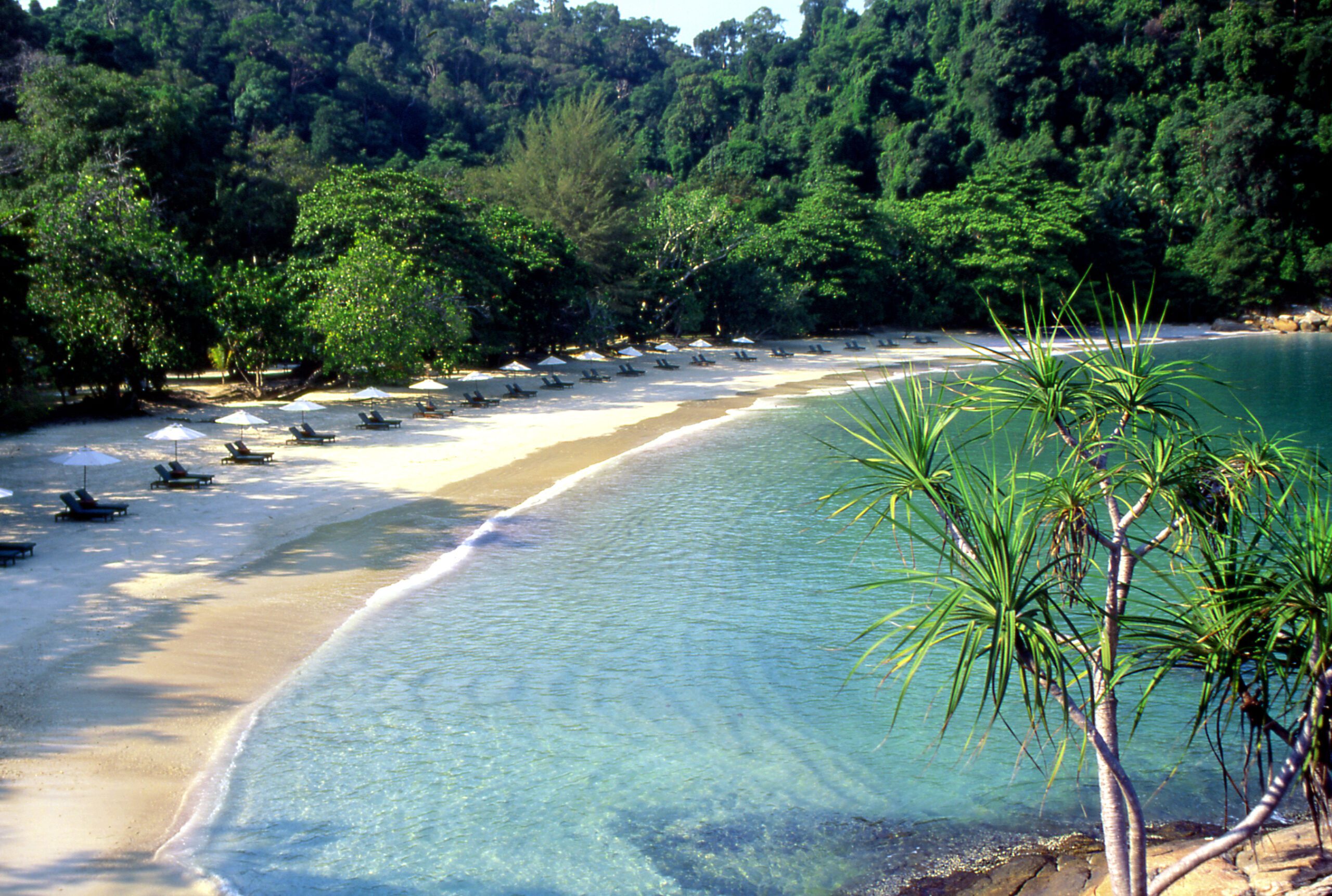
Emerald Beach, the perfect place to watch the sun set / Photo provided by Pangkor Laut Resort
Malaysia’s connection to nature
In Malaysia, with offerings that stem from its multicultural society of Malays, Chinese, Indians, and Indigenous people, wellness in Malaysia is deeply connected to its nature and culture. After only a month in Malaysia, my eating habits have changed for the better. Perhaps it’s because I feel a closer connection to the land. More than 80 per cent of Pangkor Laut Island has been left as it was found. There’s a full-time naturalist who provides insight into the flora and fauna of the island, which includes pangolins among other mammals, birds, reptiles and fish.
One morning, I catch a ride to nearby Pangkor Island with Chef Rohaime. As we wade through bins of freshly caught stingrays, squid, barracuda, grouper, snapper, and Queenfish, he tells me about growing up on the island. He takes me to a room where women are sorting Pangkor’s famous blue-eyed anchovies after they’ve been dried outside in the sun. Then, we stop at the fishing boat where the daily catch has just arrived, creating a flurry of activity. These anchovies are prized by chefs for soups and recipes and exported all over the world.
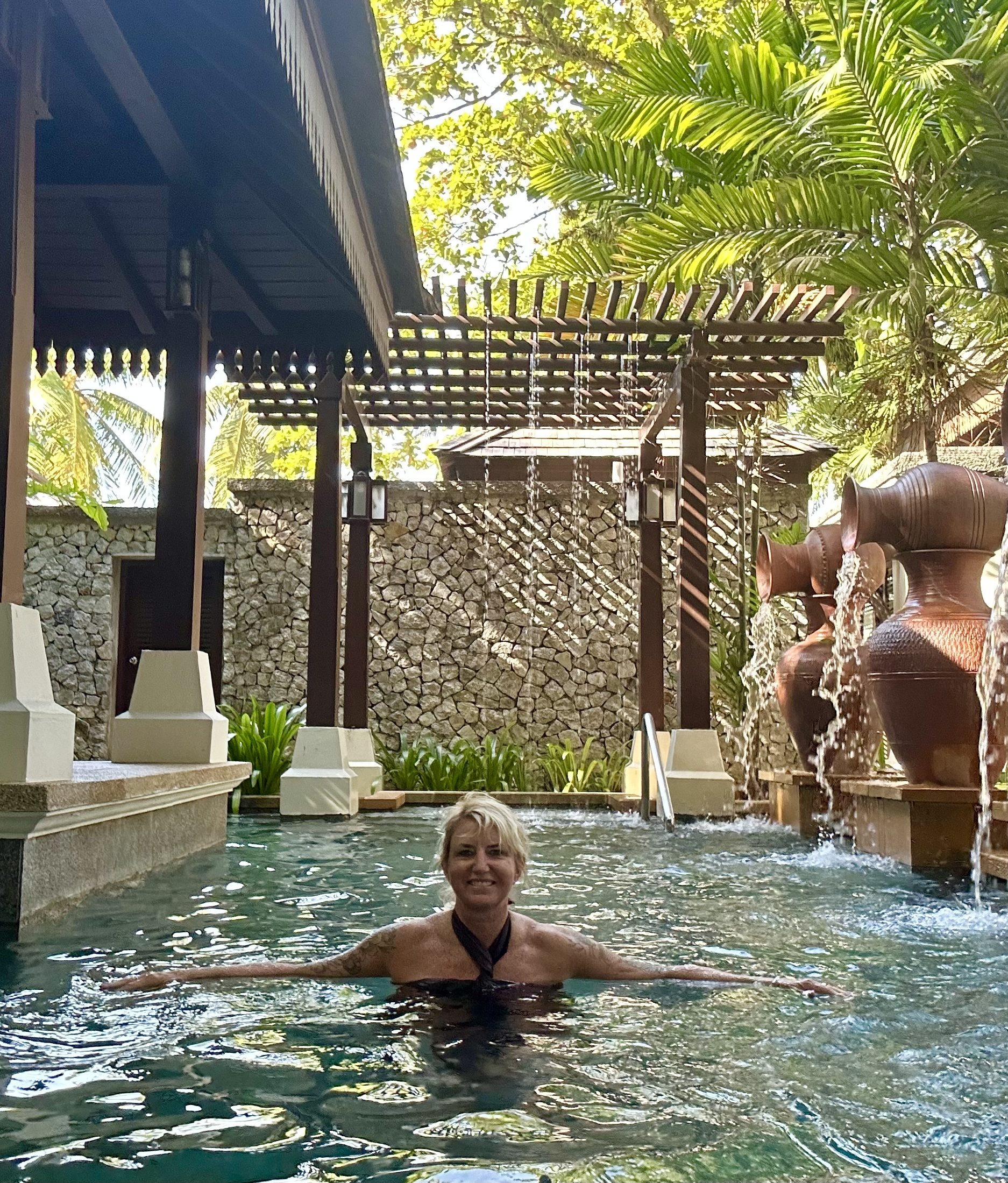
Every spa visit includes water therapies / Photo by Carolyn Ray
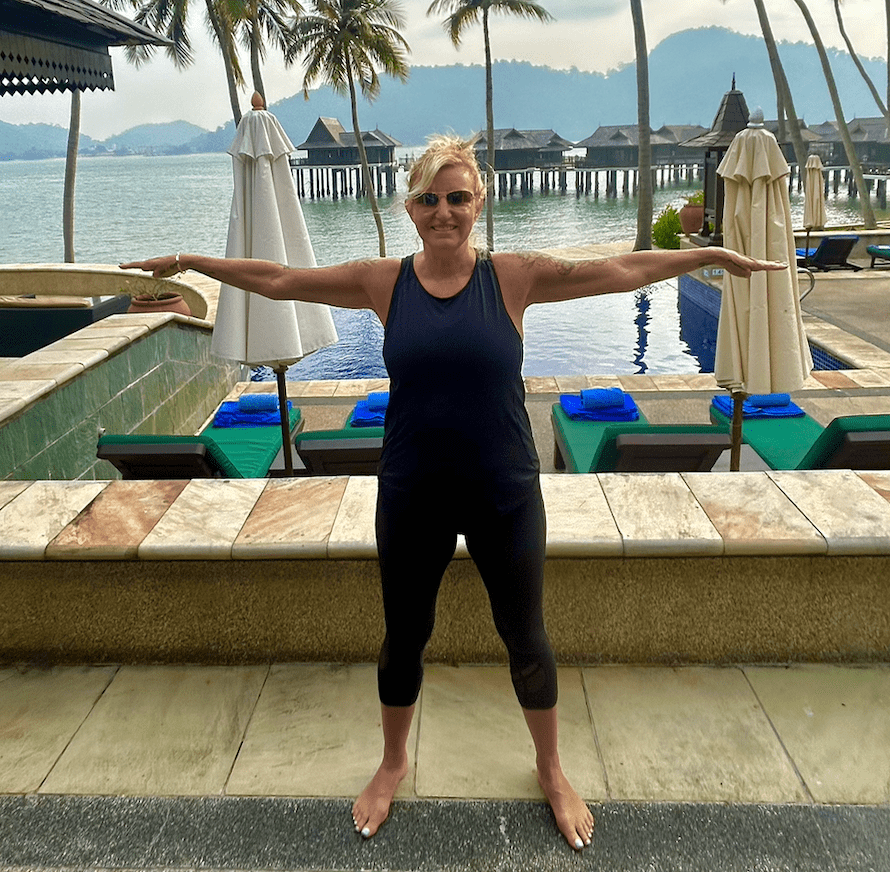
The resort offers yoga and balancing exercises / Photo by Carolyn Ray
Later, as I learn in a cooking class with Chef Lina, Malaysian food is made fresh every day, with herbs like turmeric, lemongrass, lime leaves, and coriander. I’ve stopped snacking and avoided eating Western food, so I don’t feel bloated (thanks menopause) and have actually lost weight. More importantly, I’m sleeping through the night, awakening naturally and feel energized and focused. Even my Oura ring seems to be pleased with my progress.
While I can’t give Pangkor Laut all the credit, I do feel that this respite has re-centred and re-grounded me. Swimming at Emerald Bay, jungle hikes, yoga and time at the onsite gym have had an effect too, not to mention the balmy 30 degree days. I leave the resort on a cloud of happiness and tell the staff I’m planning to return.
“Bring your friends,” they call to me, with their hands over their hearts in the Malaysian way to show gratitude and welcome.
I just might.
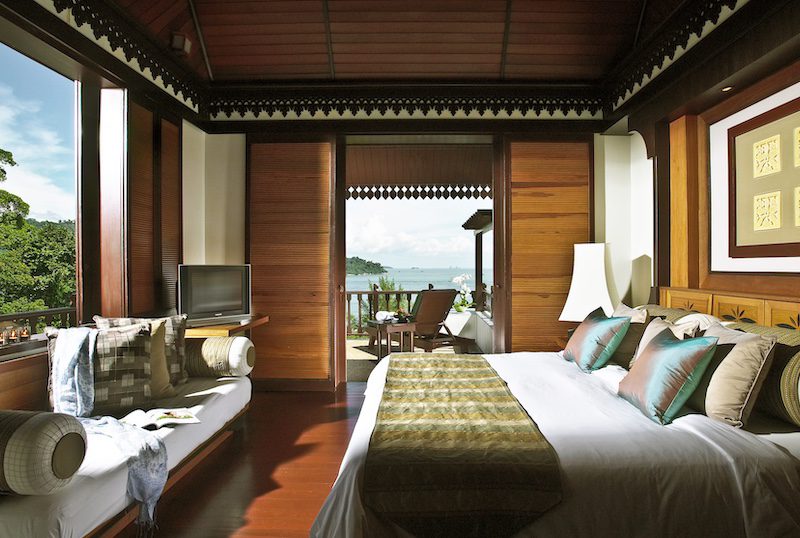
The Pavarotti suite at Pangklor Laut, where the singer stayed / Credit Pangkor Laut Resort

View of Pangkor Island from Pavarotti suite / Credit Carolyn Ray
Disclaimer: As a guest of Pangkor Laut Resort, Carolyn Ray was not compensated for her time spent researching, travelling and writing this feature, nor was JourneyWoman for publishing it. In addition, the host organization did not review this article before it was published, a practice that allows the writer to express her perspective with integrity and candor.
Make your trip to Pangkor Laut happen
How to get to Malaysia: I flew from Toronto to Kuala Lumpur, with a stopover in Japan. Check flight routes here. All visitors to Malaysia need to complete a Digital Arrival Card (MDAC) three days before arrival. Make sure you use the official government website; beware of scam sites as there is no cost for the card. After you register and fill in your details, the system will provide you with a PDF. The technology is not user friendly but the process is simple.
How to Get to Pangkor Laut Island: Located on the west coast of Malaysia, Pangkor Laut is about a three-hour drive from Kuala Lumpur or a short flight to Sultan Azlan Shah Airport in Ipoh. If you rent a car from Kuala Lumpur, make sure you have an International Driver’s License and get a Touch ‘n Go card for toll roads when you pick up your car. Once you arrive, there is paid parking available. Pangkor Laut Island has its own welcome centre, where guests take a private speedboat from Marina Bay Island at a pre-scheduled time.
How to book: Prices range from US $220 a night for the garden villas up to $550 for the spa village, according to Booking.com. All rooms include breakfast. I stayed in a Hillside villa with beautiful views of the ocean. There’s also the Pavarotti Suite, where the Italian opera singer stayed, which I toured.
What to pack: Pack light, with comfortable, breathable clothing. The resort provides locally made bug spray, umbrellas, bathrobes and flip flops. There are two shops with locally made items including spa essentials, clothing, jewelry, sarongs, and more. Meals are resort chic, nothing dressy.
Other travel tips: I used a Saily eSim in Malaysia which worked perfectly. JourneyWoman readers get a 5% discount. Don’t forget to purchase travel insurance. Check rates here.


0 Comments