

Last updated on March 18th, 2024
The connection between glaciers and climate change
by Carolyn Ray, Editor, JourneyWoman
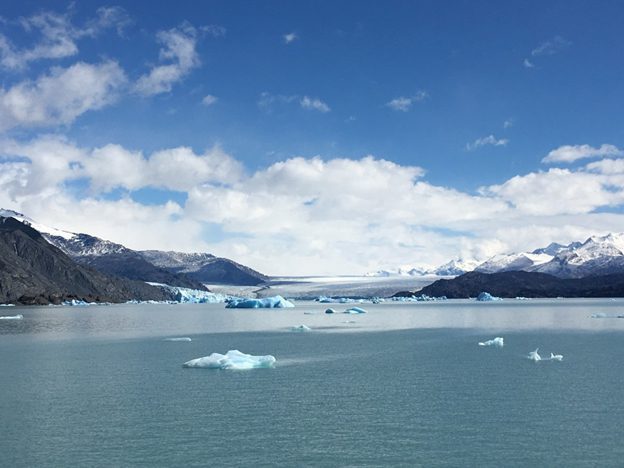
There is no more spectacular place than a glacial lake to witness climate change. Cruising through the icy waters of Los Glaciares National Park in Patagonia on a small hybrid boat, I could only imagine what the earliest explorers felt when they came across this frozen land thousands of years ago. Untouched, clean and pristine.
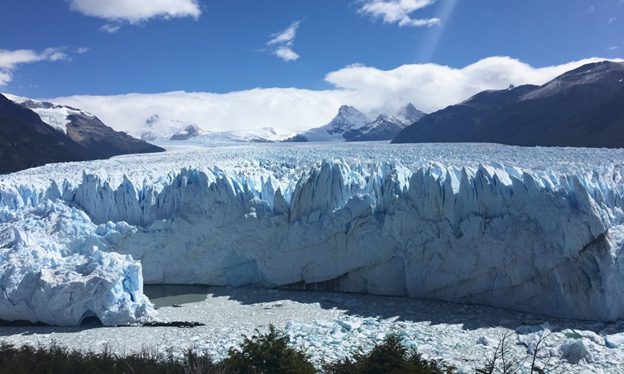
Indeed, the Southern Patagonian ice fields between Argentina and Chile are the third largest reserve of fresh water in the world. The ice field stretches across the southern Andes, measuring almost 220 miles (355 km) long and 30 miles (48 km) wide. This park is also home to the famous Glaciar Perito Moreno, a UNESCO World Heritage site, which is about two hours from El Calafate. Named after the Argentinian explorer Francisco Moreno, this glacier stretches an incredible five km across at the front and 30 km (19 miles) across. It is so vast, its beauty almost indescribable.
Glaciers and climate change
What I didn’t appreciate before this trip was the role that glaciers play in our lives. Not only are they stunning and beautiful, but they are important indicators of global warming and climate change. Today, the Earth’s surface is made up of 71 percent water, 10 percent ice and 19 percent land. Glaciers store about 69 percent of the world’s freshwater. Thanks to our very well versed tour guides, I learned that ice that took centuries to develop can disappear in just a few years. As the earth’s temperature increases, glaciers are melting faster than ever before.
It’s important for world travellers to experience, in-person, the parts of our natural world that climate change is affecting at alarming and devastating rates. Why? Because when you see these sights, something changes in you. It creates a lasting personal connection to what we stand to lose: Not only awe-inspiring beauty that touches the soul but the fundamental things that make life on this planet possible, like water.
Without glaciers, we won’t have our mountains, lakes, and valleys
Glaciers form in places where snow accumulates faster than it melts. As the snow builds up, it compresses, becoming tightly packed, changing from crystals to hard round ice pellets. Over time, the pellets become fused into one piece of solid ice. With the effects of gravity, a glacier begins to move under its own weight and exerts so much pressure that it begins to spread down a valley.
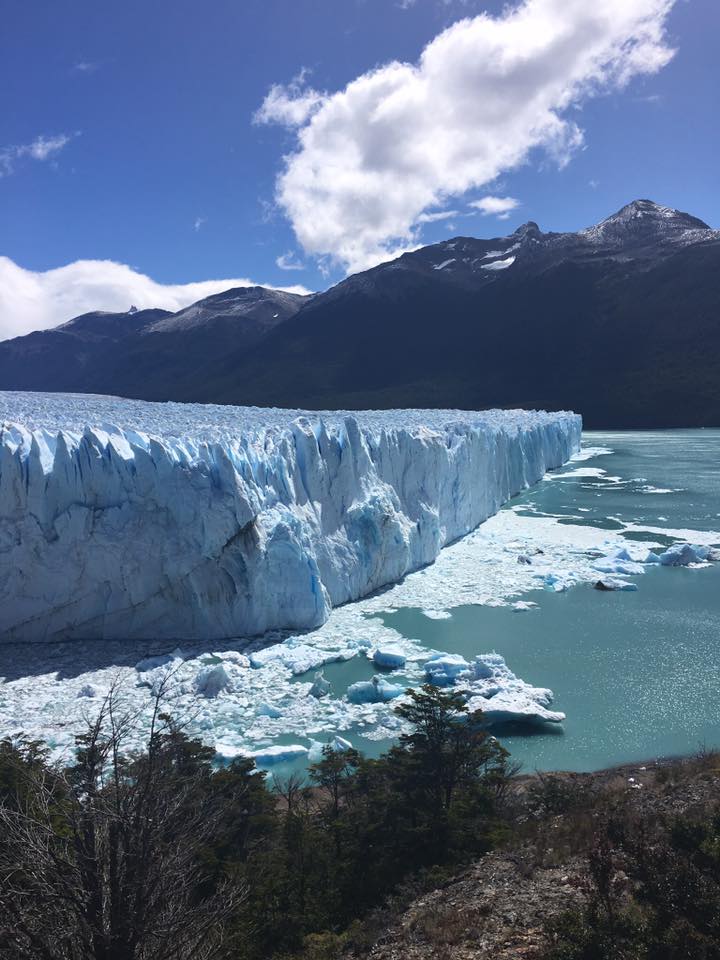
Such is the case with the Perito Moreno Glacier, which stretches an impressive 74 metres (240 ft) into the sky and an even deeper depth of 170 metres (558 ft). The Perito Moreno Glacier moves forward seven meters a day, and the noise is thunderous.
In March 2016, this glacier made world headlines when the pressure built up and its ice bridge collapsed. This dam-ice bridge-rupture cycle occurs about every five years. While you can take a boat to the edge of the glacier, the view is much better from the ramps directly across from it. Watching the jagged peaks and listening to the sound of the ice moving is an experience I will never forget.
In Argentina, thousands of years ago, glaciers covered most of what is now the park near El Calafate in Argentina. As the glaciers eroded, they shaped the land, carving out valleys and woods. These glaciers also hold evidence of the first groups of hunters, who arrived in Patagonia thousands of years ago.
In addition to raising seawater levels when they melt, the widespread loss of glaciers will likely alter climate patterns in other, more complex ways. Glaciers’ white surfaces reflect the sun’s rays, helping to keep our current climate mild. When glaciers melt, heat is released, raising temperatures. When a glacier meets the water, it begins to float and then we see a rather violent process called calving, where chunks of ice fall off, and become icebergs.
Glaciers help prevent global warming because they act as giant mirrors
According to scientists, glaciers help prevent global warming because they act as giant mirrors, deflecting sunlight from the Earth’s surface back into the atmosphere and regulating the temperature of the planet. The runoff from glacial melting forms rivers that people depend on for freshwater. With global warming occurring at an unnatural rate, glaciers are melting at a faster rate and not being restored. The only way to slow rapid glacial melting is to slow global warming.

A transformative experience
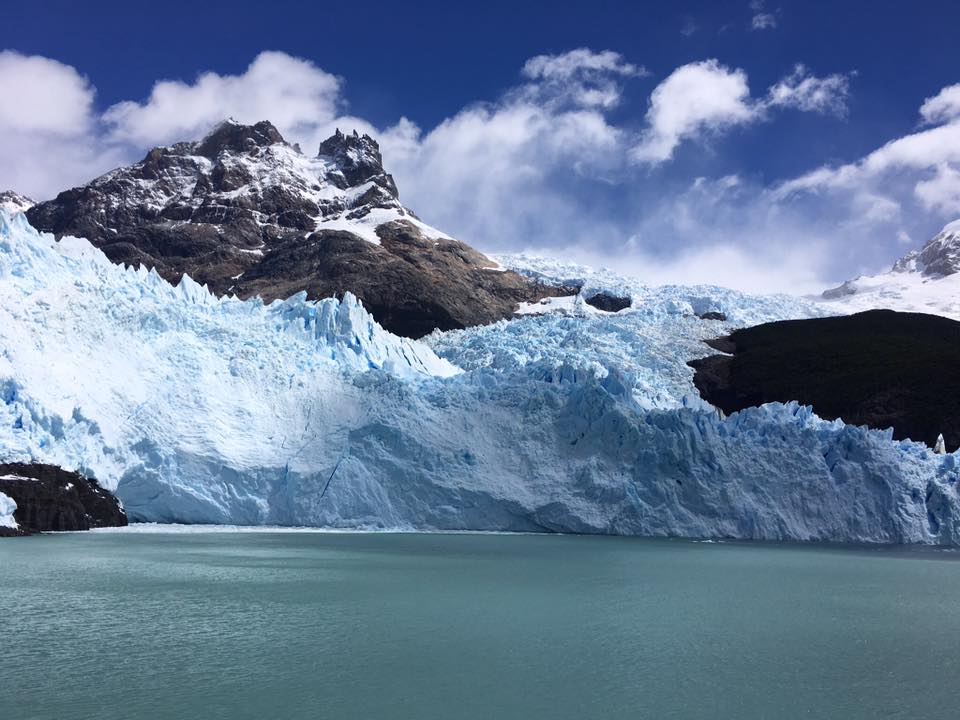
My day at the park was a transformative experience. As I returned to El Calafate and watched the sunset in the Andes, I was humbled and grateful to have seen one of the unforgettable wonders of the world. However, I was also reminded of the fragility of our earth, and the consequences of our everyday actions and decisions in such a carbon-laden economy.
As these glaciers melt, so do the secrets of our past. Knowing they are the bell weathers of climate change, we need to take a more proactive stance against climate change and protect these vast reserves of freshwater and sustain life as we know it.
More on Sustainable Travel

Practical Tips for Women to Prepare for Long-Term Travel
There’s nothing more exciting than being on the road for months, but planning for a longer trip requires some preparation to keep costs down and travel safely and well.
Five Ways You Can Teach Your Grandchildren About Sustainable Travel
As good travellers, we can teach our grandchildren how to make good decisions about the Earth when they travel.

Meet the Woman Protecting Zimbabwe’s Majestic Lions: Moreangels Mbizah, the only Indigenous Black Woman Lion Conservationist in Zimbabwe
Across Africa, many communities feel alienated from wildlife, but through the efforts of Moreangels Mbizah, this perception is changing.
Carolyn Ray

As the CEO and Editor of JourneyWoman, Carolyn is a passionate advocate for women's travel and living the life of your dreams. She leads JourneyWoman's team of writers and chairs the JourneyWoman Women's Advisory Council and Women's Speaker's Bureau. She has been featured in the New York Times, Toronto Star and Zoomer as a solo travel expert, and speaks at women's travel conferences around the world. In March 2023, she was named one of the most influential women in travel by TravelPulse and was the recipient of a SATW travel writing award in September 2023. She is the chair of the Canadian chapter of the Society of American Travel Writers (SATW), a member Women's Travel Leaders and a Herald for the Transformational Travel Council (TTC). Sometimes she sleeps. A bit.
0 Comments
We always strive to use real photos from our own adventures, provided by the guest writer or from our personal travels. However, in some cases, due to photo quality, we must use stock photography. If you have any questions about the photography please let us know.
Disclaimer: We are so happy that you are checking out this page right now! We only recommend things that are suggested by our community, or through our own experience, that we believe will be helpful and practical for you. Some of our pages contain links, which means we’re part of an affiliate program for the product being mentioned. Should you decide to purchase a product using a link from on our site, JourneyWoman may earn a small commission from the retailer, which helps us maintain our beautiful website. JourneyWoman is an Amazon Associate and earns from qualifying purchases. Thank you!
We want to hear what you think about this article, and we welcome any updates or changes to improve it. You can comment below, or send an email to us at [email protected].