
Last updated on February 5th, 2026
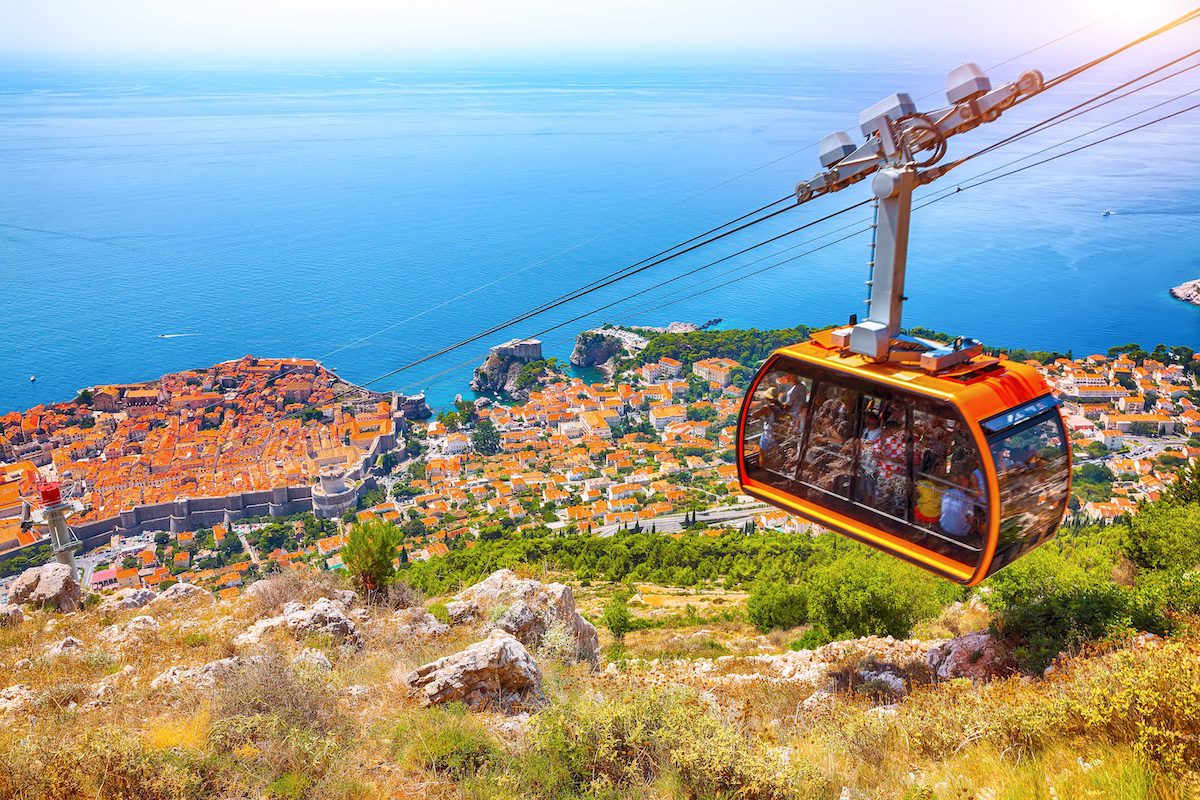
Featured image: Gondola rides around the world make it easier to see the world from different perspectives | Photo by Pilat666 on Envato
Gondolas offer breathtaking views that can transform how women experience a destination
by Karen Gershowitz
Is there anything more breathtaking than floating serenely above the mountains in a gondola or cable car? Not all gondolas are found on ski slopes, as I’ve discovered in my travels. Often, they serve as public transit and can be ingenious solutions to geographic challenges, like steep, mountainous areas or natural barriers like rivers, dense forests, ravines and valleys. For travellers, gondolas offer a panoramic view at a very affordable price, and many of them make travel easily accessible to everyone.
In my travels as I have floated above cities, I’ve realized that there’s another benefit of gondolas. They let you slow down, look out, and appreciate the full tapestry of a city. Hillside neighbourhoods become patterns, and traffic movements look like choreography. Neighbourhoods and geographic features, like rivers and mountains, form a mosaic, showing all the connections that exist between humanity and nature.
Get stories just like this one delivered straight to your inbox. Join the newsletter here.
5 gondola rides around the world for women to experience
1. The Metrocable in Medellín, Colombia
In Medellin, I crisscross the city on the Metrocable. It is local transportation, a tourist attraction, and a lesson in how a city reinvented itself. As Medellin expanded rapidly in the late 20th century (after the demise of the drug cartels), neighbourhoods climbed from the central valley up the city’s forbiddingly steep slopes. The people who lived high on the hillsides faced daunting commutes to jobs downtown. The roads were too narrow and steep for bus service.
In 2004, the government pioneered a fast-moving urban gondola system called Metrocable that carries commuters from the hills to the light-rail station at the valley floor. There are now six lines. One is specifically meant for tourists, offering scenic rides to the Parque Arví ecological reserve. It’s a great way to see the city for under US $1.
Travelling above dense hillside neighbourhoods, there are patchwork rooftops, narrow stairways, and flashes of everyday life: laundry fluttering, kids kicking soccer balls, and people shopping. For travellers interested in urban design, social change, or understanding how cities work, this ride provides sightseeing with context, and it’s also a fantastic scenic journey.
Read More: About Medellin’s Cable Cars and Escalators
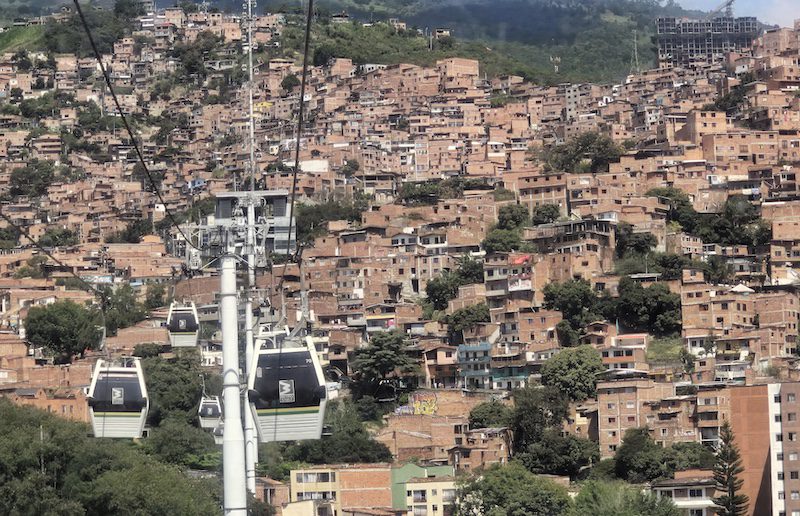
Riding on the Metrocable in Medellín / Photo by Karen Gershowitz
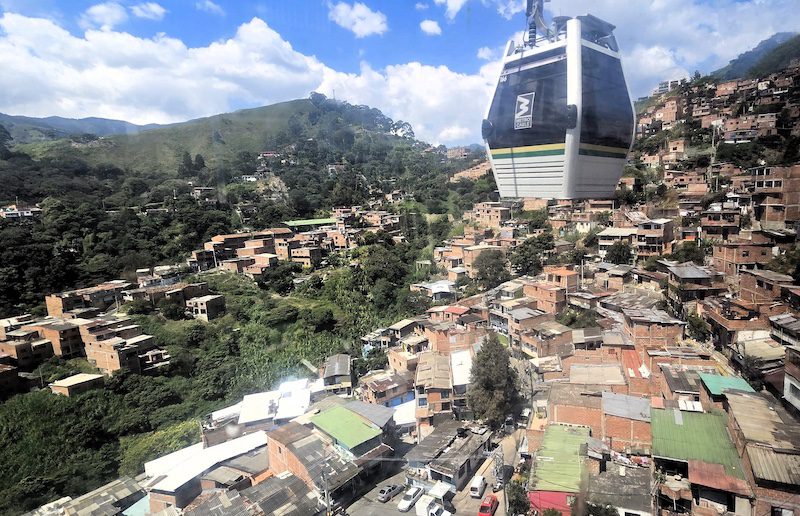
Views from the Metrocable in Medellín / Photo by Karen Gershowitz
2. Mi Teleferico Gondola in La Paz, Bolivia
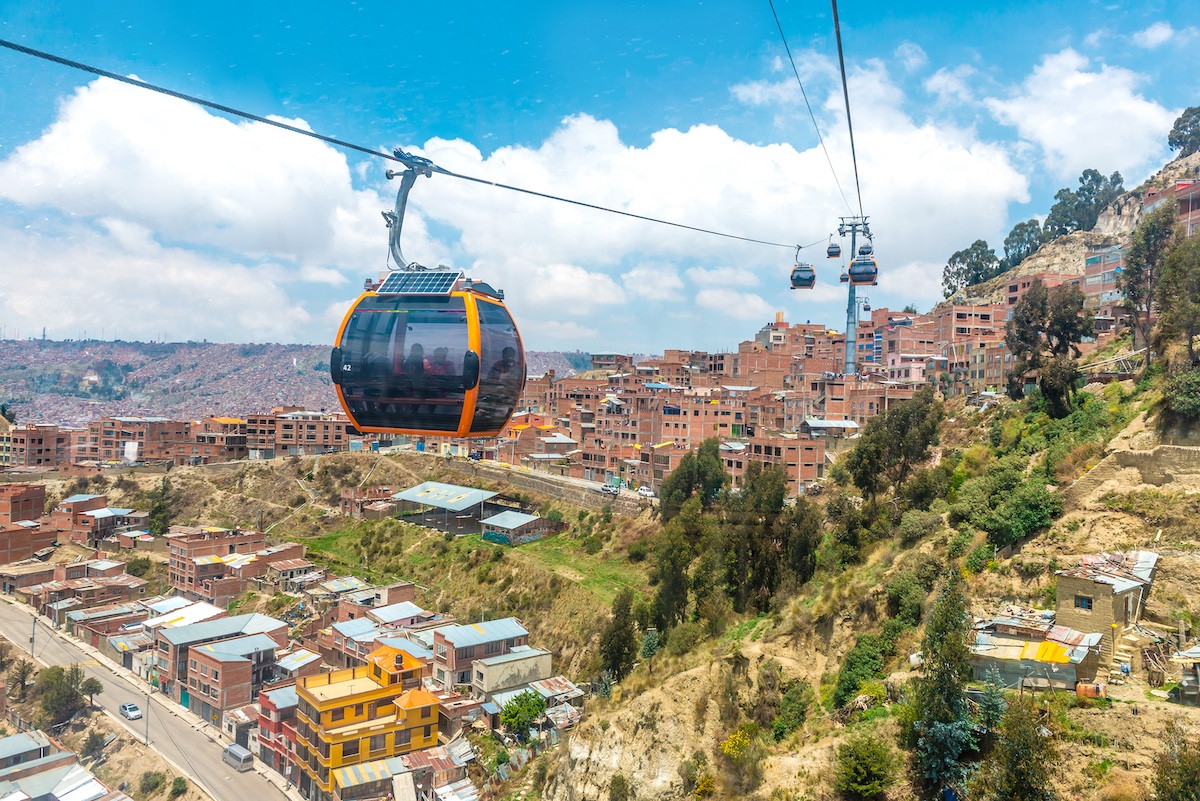
La Paz is a city of contrasts, where people in traditional clothing live and work alongside people in suits. It’s a mix of slums, wealthy suburbs, and a lively commercial center, all connected by the longest cable car system in the world. For travellers, riding these cablecars is one of the most dramatic ways to understand the city, shaped by altitude. Riding it costs only a few cents.
Prior to the construction of the Mi Teleferico metro system in 2014, it took hours to get around La Paz. Traffic was dense, roads were narrow, and there were frequent car accidents. Mi Teleferico started with three cable car lines and now has 11, with more under construction.
For visitors, Mi Teleférico is an unbeatable orientation tool. In a single ride, you see how geography, class, and history intersect, and gain access to neighbourhoods rarely included on traditional itineraries. The yellow line offers the best views of La Paz and its surroundings. At the line’s final station, Qhana Pata, disembark and walk to the mirador viewpoint. It offers a beautiful view of the city and the Ilimani volcano. On your return trip, stop at Sopocachi station, which has restaurants, coffee shops, and art galleries.
3. La Téléo gondola in Toulouse, France
Europe’s first urban aerial cable car debuted in 2022, not in a ski resort, but in the heart of Toulouse, France. The Téléo gondola system demonstrates how cable cars are becoming part of everyday city life around the globe.
Téléo was envisioned as a way to deal with heavy traffic clogging key routes in the city. There wasn’t enough space for more roads or time to build a subway system. So, what looked like a geographic obstacle became an opportunity. Instead of carving new roads through dense neighbourhoods, the city went up.
Téléo’s gondolas glide roughly 300 feet above the ground, linking three stations across the southern part of the city. What used to be a thirty-minute surface commute now takes just 10 minutes. At peak times, cabins arrive every 90 seconds, each carrying up to 34 passengers in glass-walled cars designed by a former Ferrari designer. The gondolas are not just functional, but elegant.
For residents, it’s a daily time-saver. For visitors, Téléo doubles as an aerial city tour, floating above rivers, rooftops, and green corridors in a way no bus or metro ever could. It offers an instant sense of Toulouse’s geography, scenery, and transportation rolled into a single, effortless, inexpensive ride (fares start at $1.90).
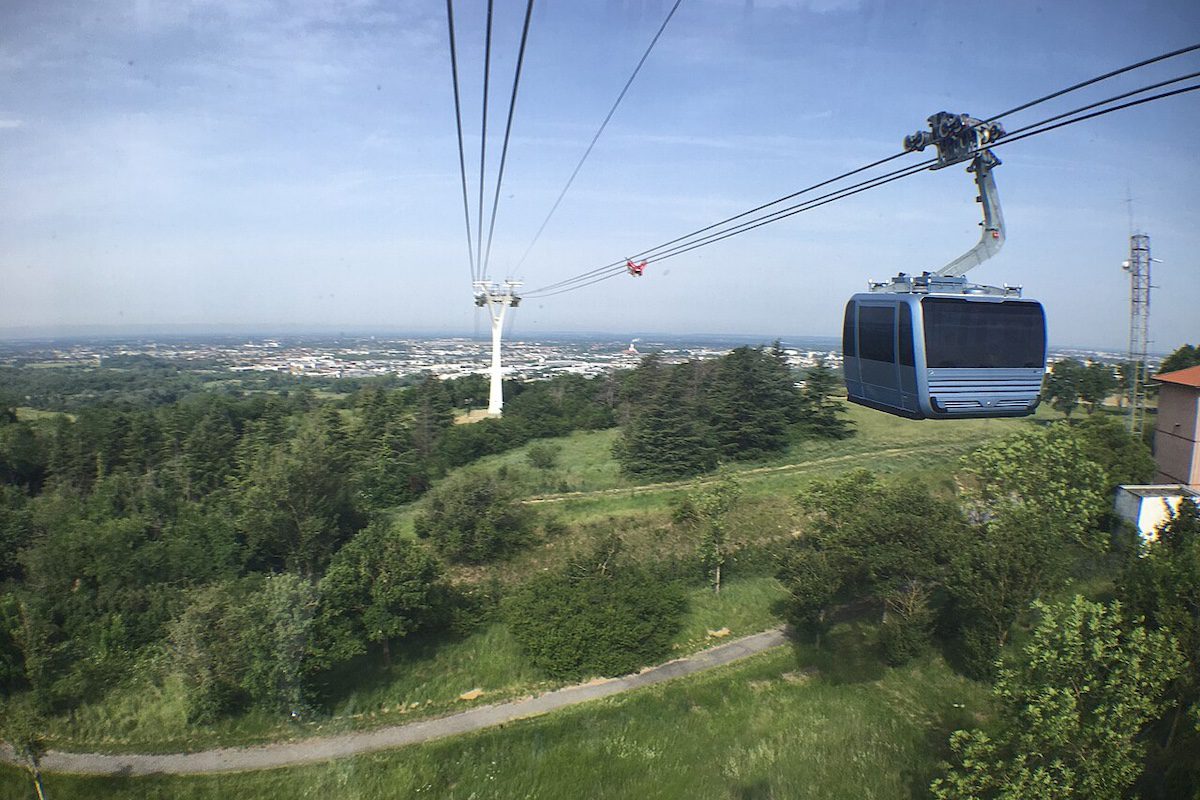
Toulouse Téléo cable car / Photo by Frédéric Neupont, CC BY-SA 4.0, via Wikimedia Commons
4. The Sun Moon Lake Gondola in Sun Moon Lake, Taiwan
Sun Moon Lake is cherished by the Taiwanese for its serene beauty, cultural significance to the Indigenous Thao people, and its long-standing role as a symbol of harmony between nature, tradition, and national identity.
On my recent trip to Taiwan, I take a ride on the Sun Moon Lake Ropeway. This gondola links the Formosan Aboriginal Culture Village with the shores of Sun Moon Lake. The car glides over water so still I see perfect reflections of the surrounding mountains and striking views of traditional temples, cycling paths, and fishing boats dotting the water. Unlike urban systems, this gondola is meant for tourists. It is quiet, peaceful, and stunningly beautiful.
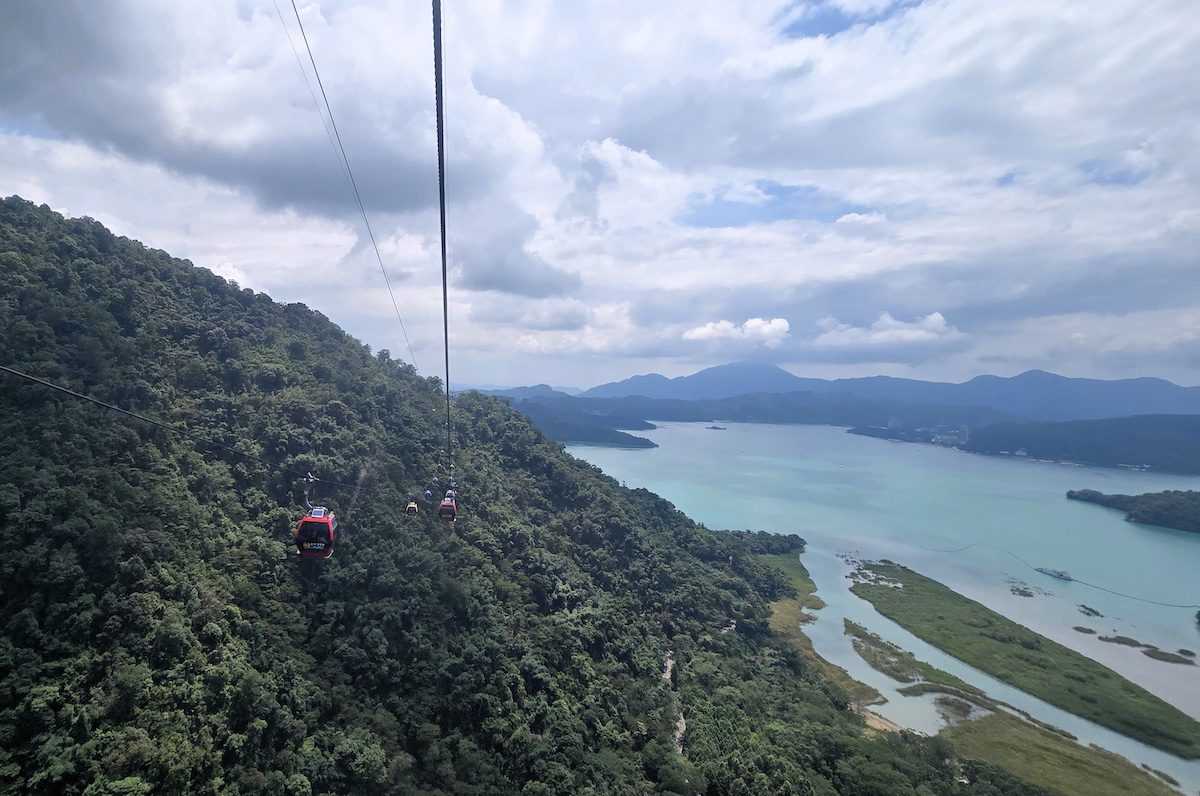
The Sun Moon Lake gondola in Sun Moon Lake, Taiwan / Photo by Karen Gershowitz
5. The Table Mountain Aerial Cableway in Cape Town, South Africa
Cape Town’s Table Mountain Aerial Cableway serves travellers by opening one of the world’s most iconic landscapes to everyone.
Table Mountain’s flat summit has long defined the city’s skyline. I’d been told the view from the top is spectacular, but because I have limited mobility, hiking there wasn’t an option for me. The Cableway allowed me to reach the summit and enjoy the sweeping views.
There is one catch. The service is shut down when Cape Town’s powerful winds whip across the summit, sometimes without much warning. I learn this by waiting an hour for the wind to subside. Though the top looks clear, gusts had transformed the flat top into a wind tunnel, and the cable cars sat motionless.
When service finally restarts, the reward is immediate, both from the cableway cabin and the summit. The views sweep across the city centre, Lion’s Head, Camps Bay, and the Atlantic Ocean. On top, a network of well-marked, mostly level walking paths fans out across the plateau. You can wander at your own pace. Take short strolls to viewpoints or longer loops if you’re able. It’s one of the rare places where dramatic scenery and accessibility coexist, provided the mountain cooperates.
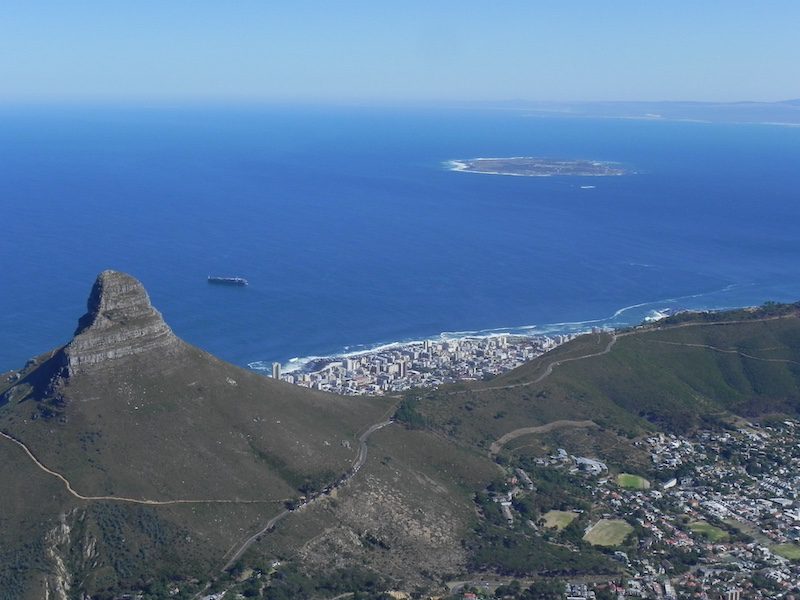
Views from the Table Mountain Aerial Cableway in Cape Town / Photo by Karen Gershowitz
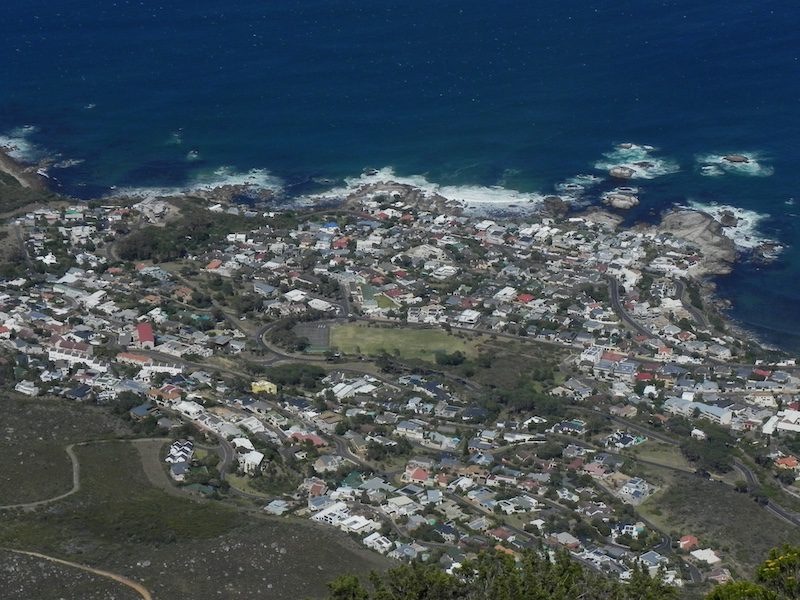
Views from the Table Mountain Aerial Cableway in Cape Town / Photo by Karen Gershowitz
Other unique gondola and cable car rides around the world
Urban & Social Connectors
- Cablebús, Mexico City, Mexico: A modern urban gondola linking hillside neighbourhoods to the metro system.
Nature + Access (Without Skiing)
- Ngong Ping 360, Hong Kong, China: Links dense urban Hong Kong with monasteries, hiking trails, and sacred sites.
- Sugarloaf Cable Car, Rio de Janeiro, Brazil: Two-stage ride offering panoramic views of Guanabara Bay, Copacabana, the city, and the Atlantic
- Tianmen Mountain Cableway, Hunan, China: One of the world’s longest cable cars, delivering visitors to a sacred mountain landscape.
Islands, Water & Edge-of-the-World Perspectives
- Sentosa Cable Car, Singapore: This gondola travels from a hyper-urban cityscape to island and coastline views.
- Langkawi SkyCab, Northwest Malaysia: Sweeping rainforest and sea views that frame Langkawi’s geography from above.
Cultural & Historic Sites
- Montjuïc Cable Car, Barcelona, Spain: Aerial access to historic fortifications, gardens, and Olympic-era landmarks.
- Masada Cableway, Israel: Allows visitors to reach an ancient desert fortress without the steep and hot climb.
Read More: Lucerne, Switzerland’s Historic Cable Car
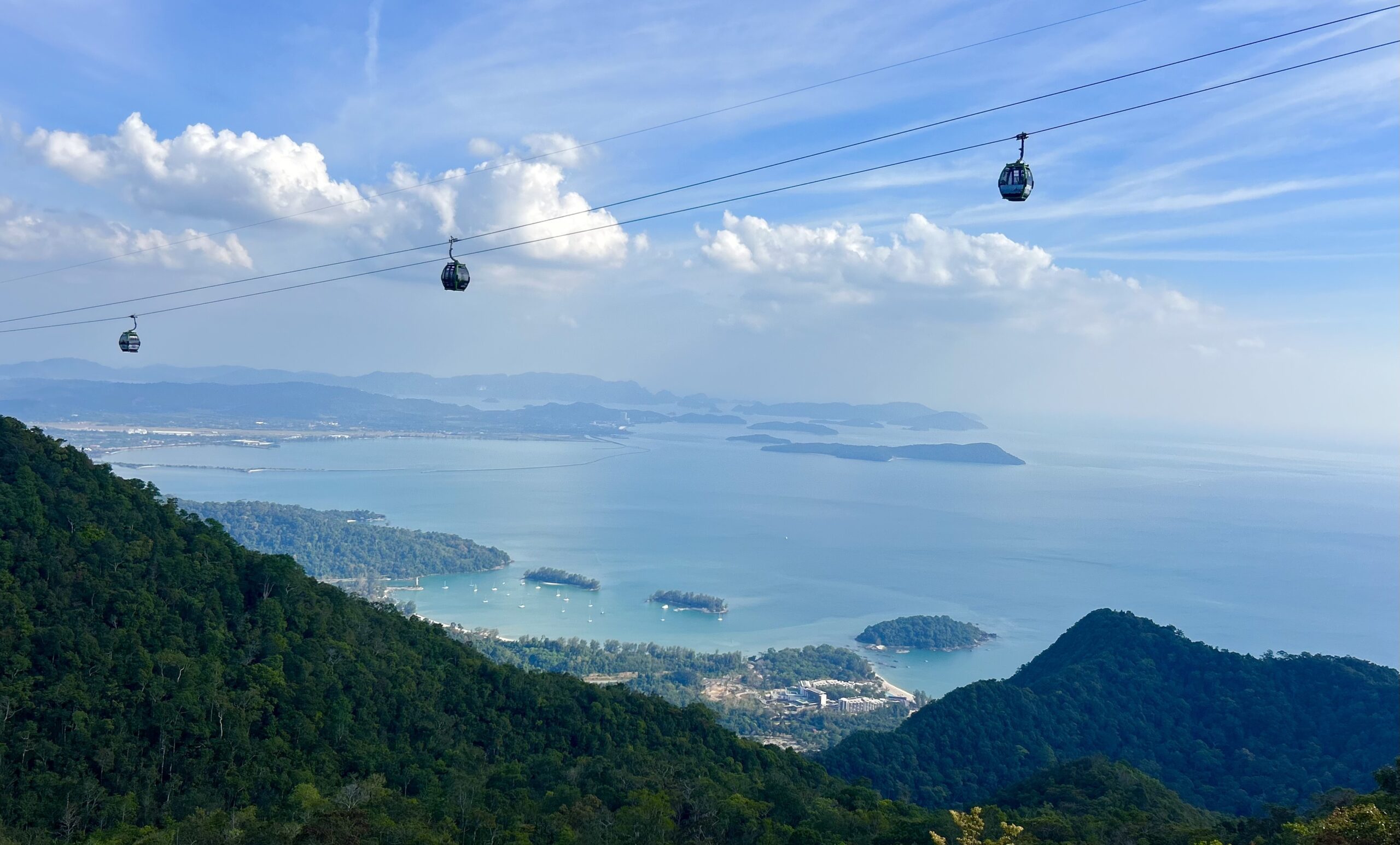
Views from Langkawi’s cable cars of the ocean / Photo by Carolyn Ray
Practical advice on how to find, pay for, and experience gondola rides
If you’re inspired to add one (or more) of these cable cars to your itinerary, here’s how to make it happen without stress:
1. Finding Them
Most urban or sightseeing gondolas will appear on:
- City transit maps: In places like Medellín, Mexico City, or La Paz, gondolas are part of the public transit network. Look for “Metrocable,” “Cablebús,” or system names like Mi Teleférico on official metro/bus maps.
- Tourism websites and apps: Official tourism boards almost always list cable cars in their “things to do” sections, often with links to schedules, ticketing, and safety info. Many are included in their Citypass features for public transit.
- Transit apps: Google Maps, Moovit, Citymapper, and local apps often show routes and stops for urban cable cars just like buses and trains.
2. Buying Tickets
Payment systems vary by type, but here are the common methods:
Urban Transit Gondolas
Many locations use the same card or ticket as local buses and trains. You can usually:
- Buy a reusable transit card at stations or kiosks
- Pay cash at ticket counters (in many Latin American cities)
- Fares tend to be very low (often under a dollar or just a few dollars).
Sightseeing / Tourist Gondolas
Tend to be more expensive than Urban Transit options.
Tickets may be sold at:
- On-site ticket booths
- Official websites (advance purchase)
- Tourist information centers
- Third-party ticket sellers or on city combo passes (like Viator or GetYourGuide)
Advance online booking is helpful during peak travel seasons. Some places offer round-trip vs. one-way pricing.
General Payment Tips
- Check whether cards are accepted, and if so, get a Wise card to tap without paying currency exchange fees. In some countries, cash-only is still the norm.
- Look for official ticket logos or signs to avoid unofficial sellers.
- Transit cards are often reloadable and can be shared with other public transport.
3. Timing Your Ride
- Ride early or late in the day for softer light and fewer crowds.
- For urban systems, avoid rush hour if you’re sightseeing rather than commuting.
- Scenic rides (not public transport) often have peak views at sunrise or sunset. Check the schedule so you’re not halfway up when the light fades.

More Unique Things to Do Around the World


Karen Gershowitz

Karen has been traveling solo since age seventeen, when she flew to Europe and didn’t return to the US for three years. She got severely bitten by the travel bug and since then has traveled to over ninety countries and has visited all fifty states -- many of them multiple times. In her career as a marketing strategist she traveled the world conducting thousands of meetings, focus groups and interviews. Her skills as an interviewer have persuaded total strangers to talk candidly about the most intimate of subjects, personal bankruptcy, illness and religion. When traveling for pleasure, those same skills helped her to draw out people’s stories. Karen’s first book of travel stories, Travel Mania: Stories of Wanderlust, explores the confluence of travel and life events, and how travel has changed her beliefs and life direction. Wanderlust: Extraordinary People, Quirky Places and Curious Cuisine continues those stories, addressing memorable food, people and places she experienced in her travels.
0 Comments