

Last updated on May 30th, 2021
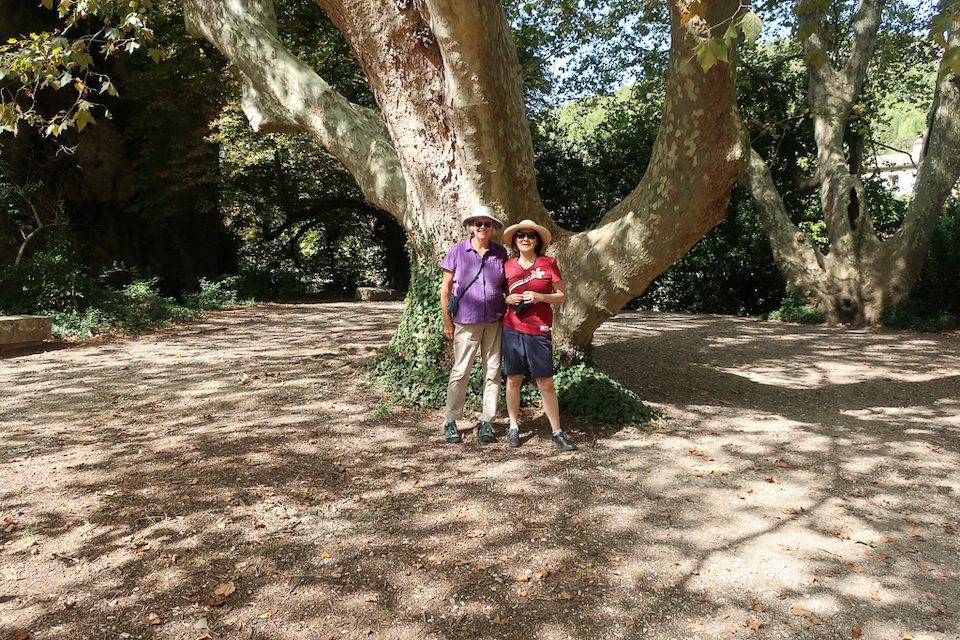
Featured Image: Pauline meeting up with fellow slow traveller Janie in Luberon, France / Photo by Pauline Kenny
Six benefits of slow travel and why it’s here to stay
By Amanda Burgess, Editor, JourneyWoman
As we look towards the future of travel, wanderers the world over will be looking to do it differently. We have an opportunity to recast many practices that were damaging to the earth, its creatures, and communities. We also have an opportunity to recast where, how, and why we travel. The ongoing shift towards more conscious travel will naturally push more travellers to embrace the benefits of slow travel. We sat down with one of the pioneers of the slow travel movement, Pauline Kenny, to chat about what it is, why it matters, how it differs from regular tourism, and its key benefits.
What is slow travel?
An offshoot of the slow food movement, which began in 1980s Italy to protest the opening of a McDonald’s in Rome, slow travel is a mindset that protests the concept of tick-box McTourism – a race to check off countries and experiences in a dizzying bid to see all and do all.
Contrary to what the term itself implies, slow travel is so much more than the speed at which you travel, or even the length of your trips. It’s a mindset that you can adopt on travel of any length – even day trips at home – and focuses on a more cultural and environmentally friendly approach to travel.
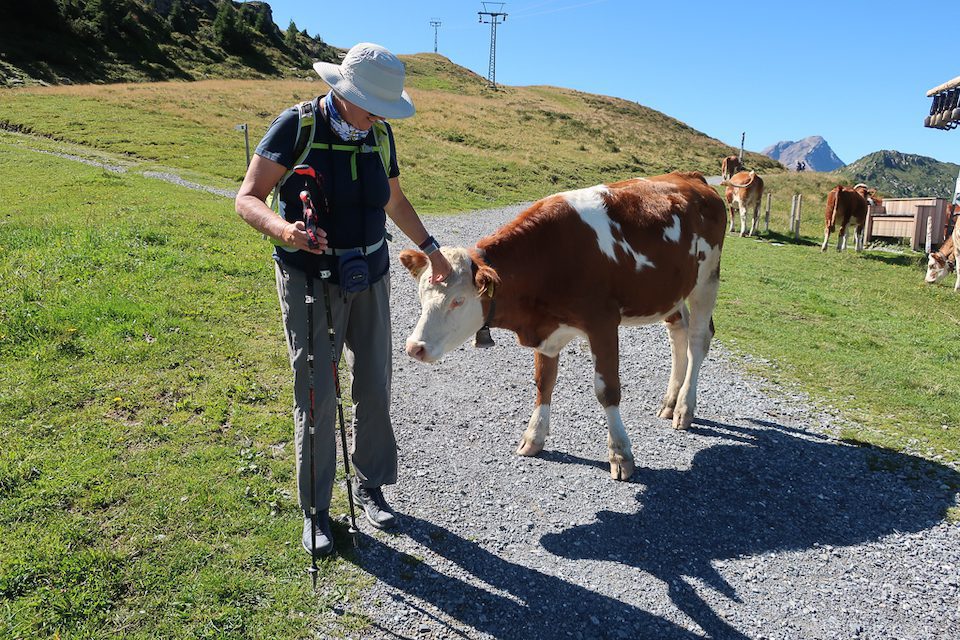
Pauline greeting a cow in Lenk-im-Simmental, Switzerland
The philosophy of slow travel is rooted in connection, and the individual and collective responsibility of travellers to protect and conserve. We define slow travel as taking the time to connect to people, cultures, and the natural world in a sustainable way.
The slow travel mindset is at the heart of our ethos at JourneyWoman, part of something we call Authentic Travel – the experience that is created when you connect and engage the world with curiosity as your compass.
Read more about Authentic Travel and tips for how you can embrace it here.
How is slow travel different from regular travel?
If you’re coming home from a trip more tired than when you left, with a camera full of photos, memories that you see through a lens, and a twinge of regret that you didn’t check off every item on your list, you might be more of a see-all-do-all traveller. But you just might be a slow traveller (and a JourneyWoman) if you:
- Immerse yourself in a place, connecting with locals and not just other travellers
- Support local businesses – shopping locally, eating farm-to-table, and seeking out locally-owned restaurants, hotels, tours and guides
- Do your research and seek places that are less travelled, putting your tourism dollars where they are needed
- Are aware of and accountable for the impact of your decisions on the earth
- Respect local cultures, customs, and traditions (including what to wear)
- Understand that you can’t possibly see and do all, and build your journey around what’s most important to you
Why we’re betting on a rise in slow travel post-pandemic
Slow travel pioneer Pauline Kenny – founder of online travel communities Slow Travel (now defunct) and Slow Travel Europe – began using the term in the late 1980s as a way to tout the benefits of long-term vacation rentals in Europe. Then, she and her husband sold everything they owned to live in Europe for a year, beginning in France and then moving on to Italy, Switzerland and England.
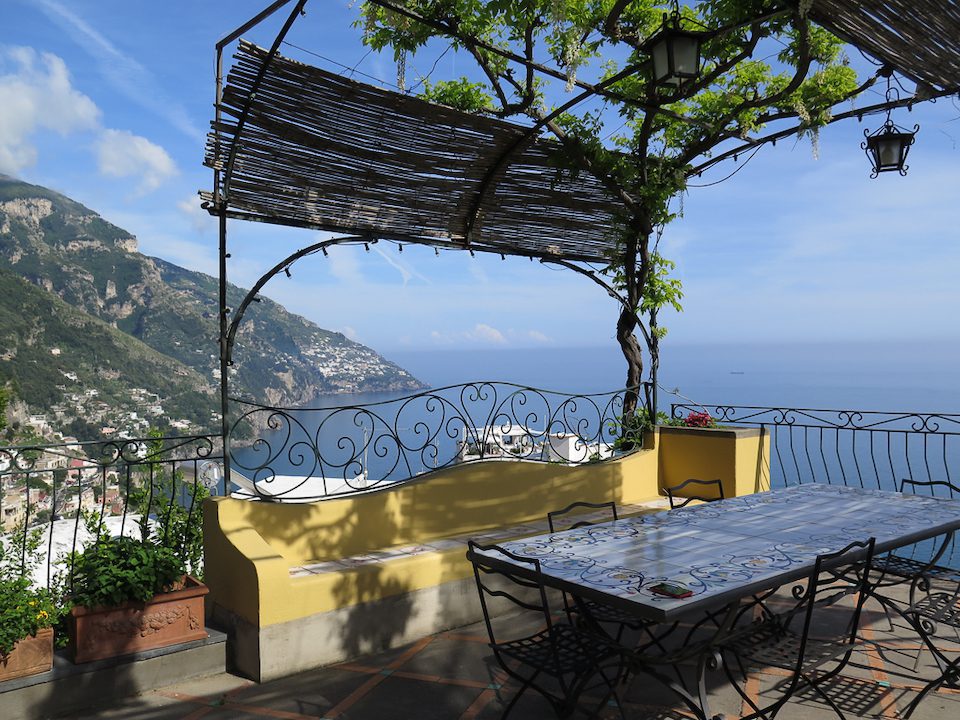
One of Pauline’s rentals in Positano
“It struck me that it’s easier to stay longer in places, and definitely cheaper – you have the ability to settle in well,” she says. “Booking vacation rentals was really important for us because I needed to be able to do some of our own cooking. I’ve been vegetarian for a long time, and while it’s a lot easier for travelling vegetarians now, it wasn’t back then.”
Kenny is betting that as the Boomer generation she’s at the tail-end of begins to retire in larger numbers, they’re going to be looking to travel more but take it slow. “Fast travel is the young person’s game. It seems to me as women get older, they do slow it down,” she says. “I’m not seeing a lack of energy or enthusiasm – they simply want to experience something more.”
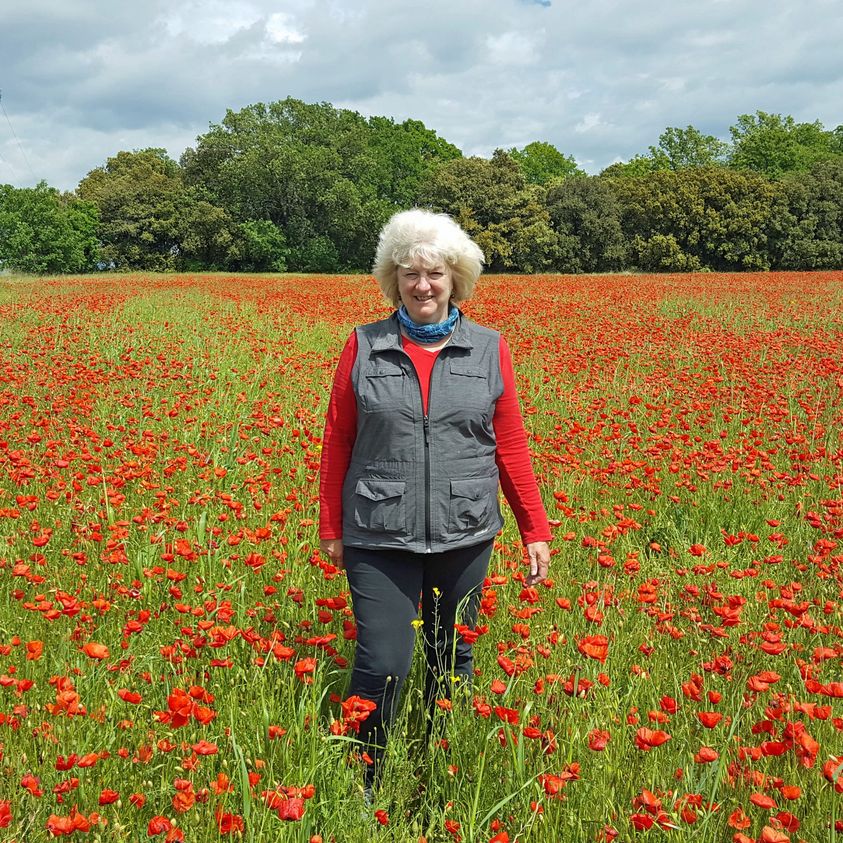
How Shifting into Slow Travel Changed my Life: A Q&A with Kathy Wood, Founder of European Experiences
European Experiences Founder Kathy Wood shares how slow travel has helped her connect to people and cultures.
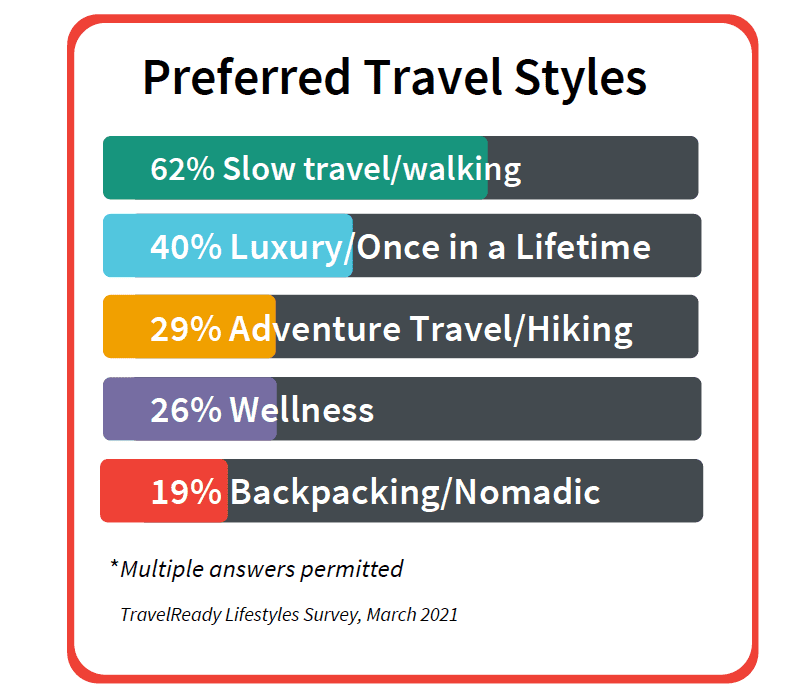
Our JourneyWoman community backs up that bet with stated intent. In our March 2021 TravelReady Lifestyles Survey, slow travel was the highest scoring travel preference, outperforming luxury travel, wellness, and other choices.
Six benefits of slow travel
Slow travel is a win-win-win scenario. It’s beneficial to the traveller who is gifted with immersive travel experiences. It’s beneficial to the local economy that benefits from injections of cash from travellers who prioritize buying local. It’s beneficial to locals themselves and the communities they live and work in. Read on for a sampling of six big benefits to slow travel – for ourselves and our planet.
1. You settle into the rhythm of a place versus being a disruptive force
“The traveler sees what he sees. The tourist sees what he has come to see.” – G.K. Chesterton
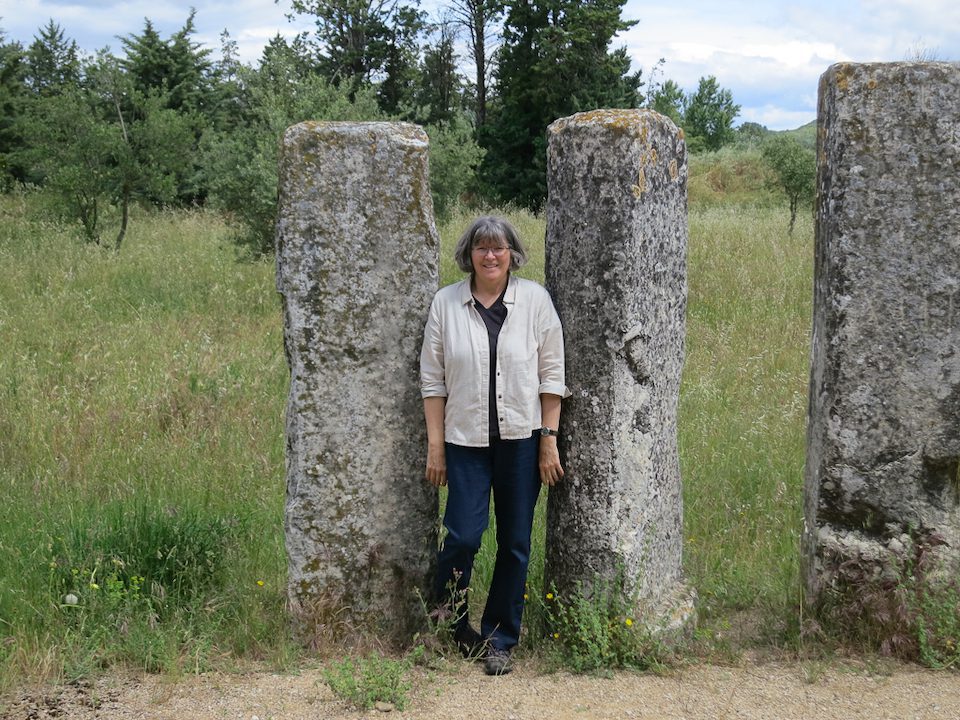
In Southern France, Pauline sought out these Roman mileage markers that are not a tourist attraction and were difficult to find
“It’s about having more intense experiences. I’ve travelled a lot, but I haven’t been to many countries. I really know Italy, I really know Switzerland, and I really know France,” says Kenny. “When you return to a place that you’ve been to, it’s just so different. You see so much more than on your first experience. Your first is more superficial – your eyes are catching the flashy things. Then when you start getting used to the place, you’re comfortable in the cafes, you’re comfortable with the driving, you’re starting to learn the language. You just settle into it differently.”
2. You can play at living in a place
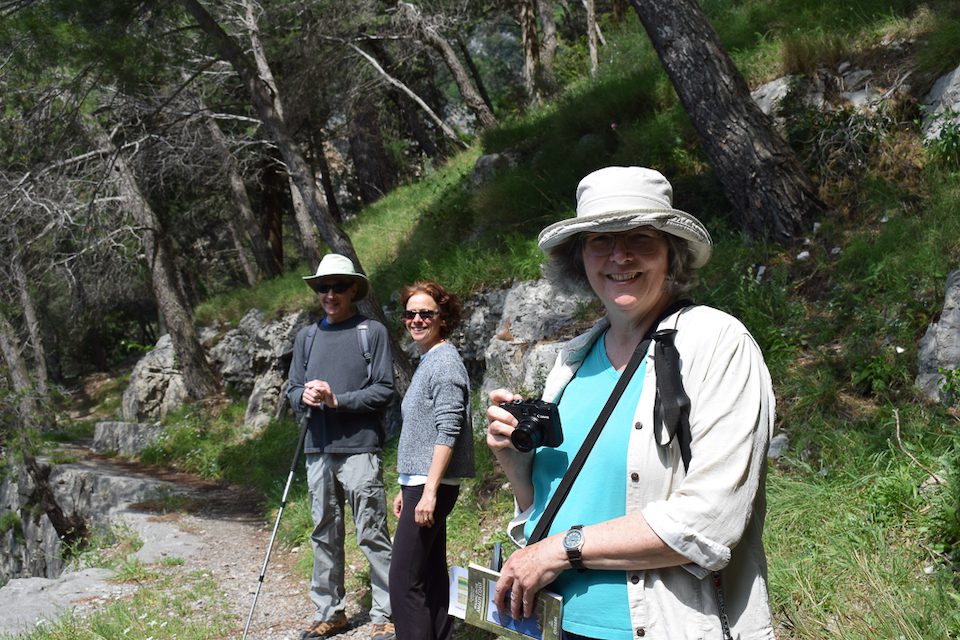
Pauline’s passion is hiking, and she and husband Steve (far left) build trips around it, like this one to Positano with friends.
It helps her understand if she could see herself living in a place full-time, as hiking is a big part of her life in the UK.
Whereas tick-box tourism is rather like window shopping at a breakneck pace, slow travel is like spending a full day with a private shopper – you get an opportunity to try on a place and see if it works for you. Staying in a vacation rental or homestay in areas where locals live gives you an opportunity to live like one.
You get to almost play at living in place, says Kenny. What would it be like to live here full-time? Does it match your lifestyle? How much would it take to live here? Could you be happy here? It’s like trying on reams of clothing with no obligation to buy. And if you visit a place you love frequently, the nuances become clearer to you over time – which area you’d want to live in, what type of housing you prefer, near what amenities. You come to understand if it’s a place you simply love to visit – or one you’d like to live in.
3. It gives you time and space to simply be
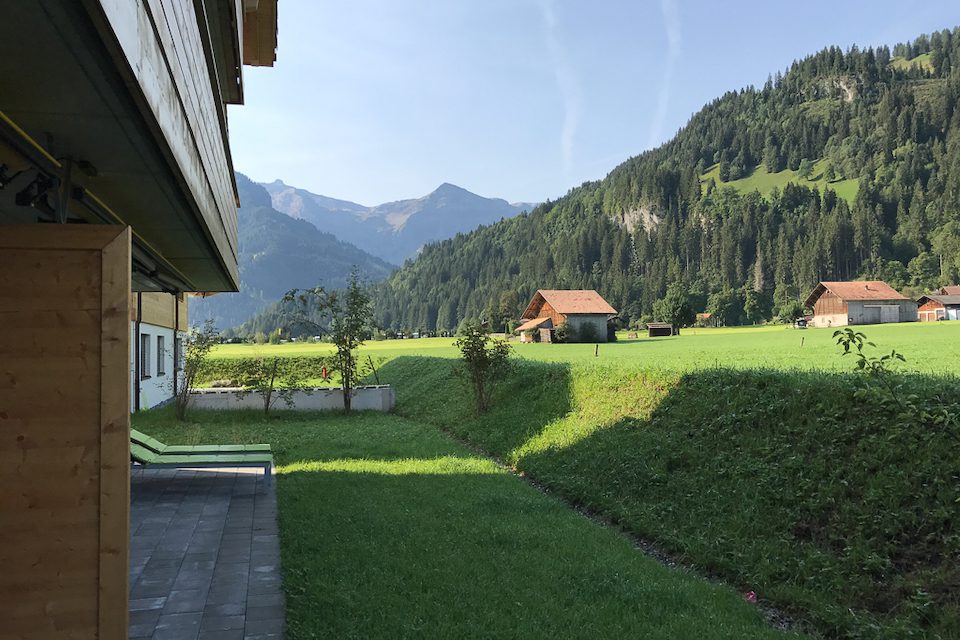
The apartment Pauline and her husband rent every summer in the Swiss Alps. After 20 years of staying different places, they chose this as their favourite
On some trips, a rest day isn’t exactly restive – it’s forced downtime used to travel from one destination to the next. When you’re in a destination for a week or more with a home base? You can give yourself a real rest day.
“When you’re doing a longer trip, you’re not high energy the whole time. You need to have one day a week where you can crash, and vacation rentals really lend themselves to that,” says Kenny. “You can have a nice day puttering around the garden, hanging around.”
4. It gives your travel a focus
Slow travel narrows the aperture of your journey, allowing you to explore a wider swath of a single region or country. As Kenny notes, it gives you time to immerse yourself in the space where your interests meet local specialization or cultural events – think cooking classes in Italy, pottery making in Japan, art classes in France, music or cultural festivals.
When you plan a slow trip around an interest, it takes on a different cadence and gives your trip deeper purpose. A week-long cooking class in Italy might lead you to the farm where the sweetest tomatoes you’ve ever tasted were grown, or to the producer of the olive oil unlike any you’ve used, or to the home of the instructor for a family-style meal with six other new friends. This is the unique flavour of slow travel.
5. You contribute to a local economy – and the environment – in a meaningful way
Slow travel is an investment in a local economy. Putting your dollars in a single region or country over an extended period of time pays dividends. Live like a local, help the locals live better.
When travel resumes, it will be about much more than slow travel or sustainable travel – it will be about regenerative travel. What is that, exactly? It’s about more than reducing your impact, or feeding the local economy. It’s about leaving a place better than you found it.
For example, Tourism New Zealand measures its success not only in economic terms but also on other indicators such as nature, human health and community identities. There’s even a booking agency called Regenerative Travel that vets its 45 member resorts based on a swath of economic, environmental and community health metrics like carbon usage, sourcing local food, employee satisfaction, and immersive guest activities.
6. The biggest slow travel benefit of all? Connection
By its very nature, slow travel reconnects travellers with their environment, landscapes, people, cultures and selves. When you slow it down, you spot opportunities you might otherwise miss.
At the beginning of 2020, I spent two months travelling solo through Australia, New Zealand and Bali, spending a total of five weeks in the latter. I divided my time between Ubud and Canggu opting for a women’s dorm at the Yoga Barn in Ubud and a villa for one on the beach in Canggu.
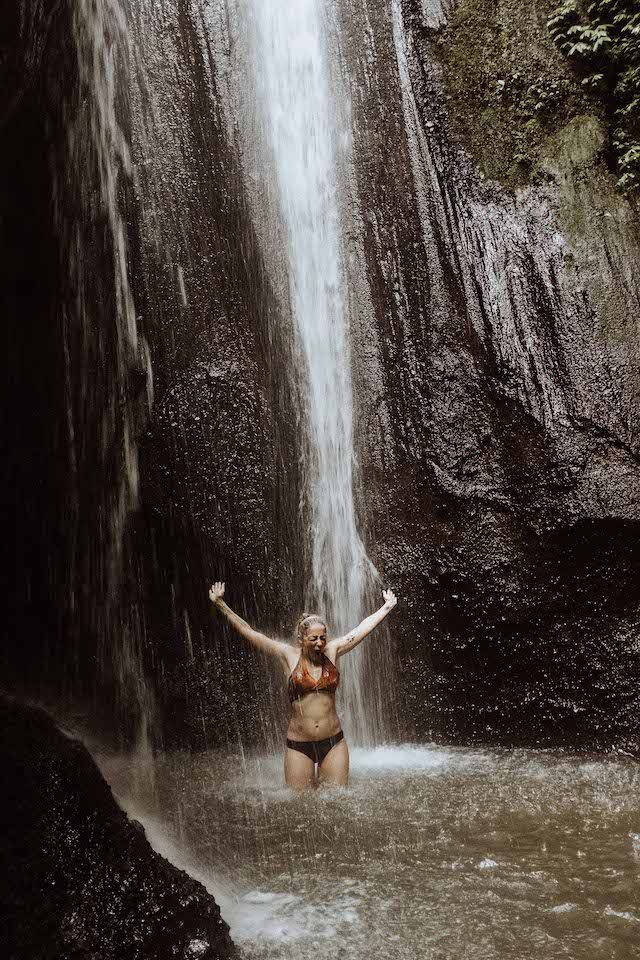
Getting up close and personal with nature in Ubud
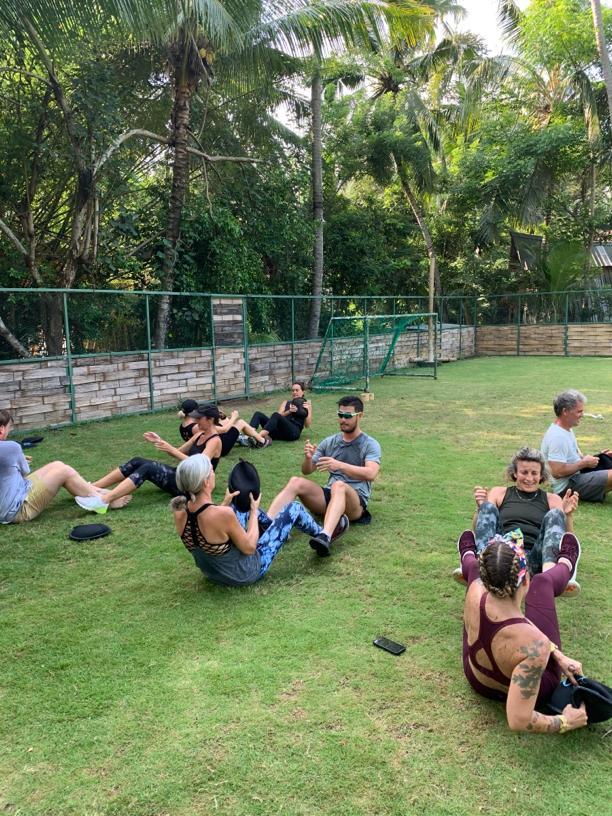
Leading a fitness class at the Green School in Bali
The first gave me an opportunity to meet and spend time with a rotating crop of women solo travellers like myself, connecting at warp speed over shared interests – travel, yoga, music, Balinese culture – as well as the locals who ran and cared for the property. I looked for locally owned and managed adventures to participate in, like a sunrise hike up active volcano Mount Batur, where I spent time chatting with one of the two guides about his life in Bali. I shopped locally, lingering sometimes for hours in women-owned shops, discussing motherhood and life with the owners. Because I kept my itinerary loose, I had the time and space to accept an invitation to lead a twice-weekly exercise class for ex-pat parents at The Green School for two weeks – a unique, fun and fulfilling experience.
In Canggu, my don’t-look-further-than-tomorrow itinerary saw me book and receive two tattoos, accept an invitation from a friend I’d met in New Zealand to attend a DJ show in Seminyak and a night of traditional cultural dance in Ubud, attend workshops, and generally go wherever my whims blew me.
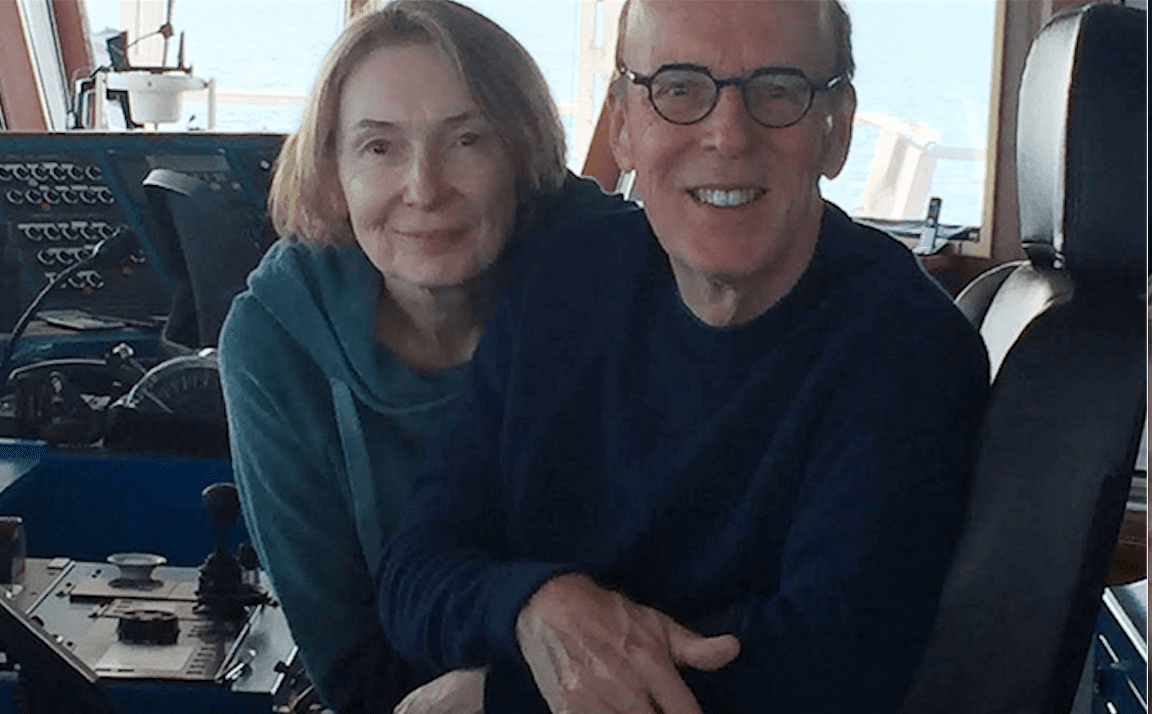
Seeing Canada’s Great Lakes by Freighter
The plan was to meet the ship in Hamilton Harbour and spend Friday night onboard in preparation for an early departure to Montreal on Saturday morning. The Algoma Strongfield would continue to Quebec City, another 24 hours of sailing.
Tips for embracing slow travel
JourneyWoman Advisory Board Member Amit Janco was forced to literally slow down the pace she moved at after falling 10 metres through a defective bridge in Cambodia in 2008, fracturing bones and damaging her nerves. As she did, she began to see the value in adopting slow travel as a mindset and practice. We asked her to share some wisdom for travellers looking to do the same in 2021 and beyond.
Trust your inner voice
People know when they need to slow down. When they want to. It’s not even about pace but making the most of your time.
“If you feel like you want to slow down as you travel, that’s the first and most important part,” says Janco. “Some people are afraid of not being caught up in hustle and bustle – or they have limited time frames. I understand that, but you don’t need to hit 10 countries in a week, because it will go by in a blur.”
Do your research
For travellers who are looking for vivid over blurred experiences, Janco suggests taking one corner of one country and researching everything you can on it. What events are happening at the national and local levels. What locals do for fun. What the cultural sites and experiences are.
“Go a little bit smaller and a little bit more intentional,” she says. “By necessity, I had to plan differently than other people, but everyone can benefit from this way of travelling.”
Slow travel demands deeper pre-trip research – from where to go, where to stay and what to see and do to maximize your experience. A more mindful approach to travel brings up a new set of questions and criteria for travellers as they seek travel methods, accommodations and experiences.
Read about our extensive list of new and emerging travel criteria based on our Travel, Her Way survey of over 1,500 women, focus groups and a summer of #TravelAtHome adventures around our home province of Ontario here.
Don’t overplan
Slow travel is about letting experiences unfold, leaving space for the elements of impulse and surprise. Keep your pre-trip research tight, and your itineraries loose. Well-planned does not have to mean overly scheduled.
Start by planning less and booking only the necessary elements like accommodations, flights and transport. Resist the urge to pre-book your activities. Get there, settle in, speak to locals and then decide what you really want to do.
“Let’s say you have two weeks. Maybe plan for just one week or plan generally – I want to be here, or I have to start here and end there on a certain day – and then be flexible,” she says. “Go with an open heart, less of a defined plan, and have a sense of wonder, curiosity and openness.”
Adjust your mindset to mindful
Slow travel is more than a way to travel – it’s a way to live. If you live your life at a breakneck place and attempt to slow down as you travel, then you’ll always be looking ahead to the next trip when there’s a lot of living in the in-between.
“I think it’s about slowing down life, becoming more mindful about the steps we take every day, whether we’re in travel mode or daily life mode,” she says. “It’s about being cognizant of our interactions with the environment, what we’re spending on, where we’re going.”
One of the most powerful slow travel experiences that Janco has ever had was travelling through Mongolia in a rickety old Russian van to the top of a hill. Many of the people in her group were grumbling that there was nothing to see. She had a different perspective.
“Sitting on top a hill, looking around 360, there was nothing but sky and ground as far as the eye could see. I thought: This is exquisite, that this still exists in our world that is becoming ever more developed, rushed, fast-paced and cutthroat,” she says. “If I could send everybody to that hill in Mongolia to slow down for the day, I would. There were no distractions, nothing to keep us busy, no entertainment – and it was magnificent.”
Do you have a slow travel story to share with us?
Comment below or email Editor Amanda Burgess at [email protected].
Read More on Slow Travel
10 Things Women Should Look For When Booking an Airbnb For Longer Stays
With women travelling for longer periods of time, here are 10 things Airbnb owners can do provide women with a more comfortable stay.
Going Psycho: Lessons from My Travels at Home
Inspired by the idea of ‘psychogeography, when we take time to slow down and experience things, we can discover extraordinary things close to home.
The July Project: Learning About Travel at Home in Nova Scotia
For the past eight years, Sandra Phinney has been thinking about—and trying to put into practice—what she’s learned about slow travel at home.
Amanda Burgess

Amanda Burgess is a Toronto-based writer and creative strategist whose bags are always packed for her next adventure. She is a Certified Cancer Journey Coach who creates a safe space for cancer patients and caregivers to design their dream lives – while living with cancer, and on the other side of it. Amanda freelanced for JourneyWoman until December 2021.
so nice to see old friend Pauline Kenny who came to visit and with whom we had several SlowTrave lunches and meetups here in Italy back in the early days of her SlowTrav website.
I used to go often to AbuDhabi, in the United Arab Emirates. The best time I spent was in the desert. The colours, the smell, the never ending, bare lanscape, the quiet, the small sounds of animals I couldn’t even see, were a blessing in my stay. You can say the same about the ocean or the Amazon forest: your eyes and your soul just drown in the beaty of impollute nature.
I think it would be nice to be able to read all your articles in one place. I prefer reading offline. Like a tangible publication. It’s just easier for me. Maybe someday you could publish a periodical or series or put the articles in a book or series of books? I know that’s probably expensive but just an idea. 😊
We hope to produce a print publication someday, but in the meantime you can click the printer icon under the main image at the top of the article and it will produce a printed PDF that can be read off offline. hope that helps! (And PS we are working on a book too!)